Editorial Guide
Oyster Sauce vs Hoisin Sauce — They Look the Same in the Jar but Taste Nothing Alike
I used hoisin sauce instead of oyster sauce exactly once. The dish came out tasting like sweet barbecue. Here's the difference, when to use which, and why confusing them ruins dinner.
Type
Editorial Guide
Linked Ingredients
Next Steps
Why Read This
This page is meant to connect history, flavor logic, and actionable kitchen judgment. It is not recipe filler. It is here to explain the mechanism behind the taste.
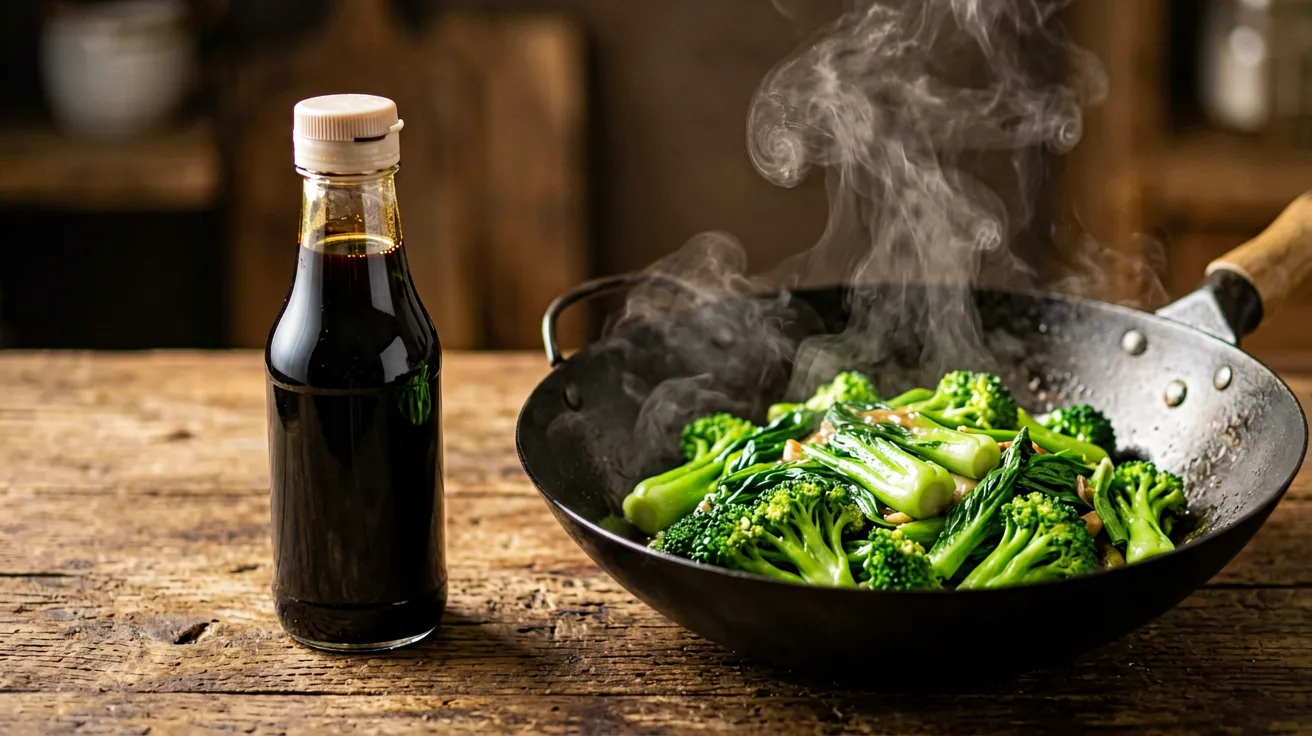
Oyster sauce and hoisin sauce look identical in the jar — dark brown, thick, glossy. I used hoisin instead of oyster exactly once, in a stir-fry of gai lan, and the dish came out tasting like someone had dumped sweet barbecue sauce over perfectly good vegetables. I scraped the whole thing into the bin and started over.
Oyster sauce is savory-forward. Hoisin sauce is sweet-forward. Oyster sauce's first ingredient is oyster extract — a concentrated reduction of oyster broth that tastes briny, savory, and slightly sweet. Hoisin sauce's first ingredient is typically sugar or fermented soybean paste sweetened with sugar or honey — it tastes sweet first, then spicy, then savory. Using oyster sauce when you need hoisin will make your dish taste like seafood. Using hoisin when you need oyster will make it taste like sweet barbecue.
Oyster sauce is a finishing glaze. Hoisin sauce is a cooking sauce and a condiment. Oyster sauce is typically added at the end of cooking — in the last 15-30 seconds, often after the heat is off — to create a glossy, savory coating. Hoisin sauce can be used during cooking (as a braising liquid component), as a dipping sauce (for Peking duck, for spring rolls), or as a marinade base. The heat behavior is different: oyster sauce burns if cooked too long (the sugars caramelize and turn bitter); hoisin sauce is designed for longer cooking.
The price difference tells you everything about what's actually in the jar. A 500g jar of Lee Kum Kee Premium Oyster Sauce costs about $22 HKD and has oyster extract as the first ingredient. A 500g jar of Lee Kum Kee Hoisin Sauce costs about $15 HKD and has sugar and fermented soybean paste as the first two ingredients. The oyster sauce costs more because oysters cost more than soybeans. The price is a direct reflection of the ingredient cost.
I discovered the difference the hard way, standing in my Hong Kong kitchen on a Thursday night, making what was supposed to be a simple vegetable stir-fry. I reached into the fridge, grabbed the dark brown jar without looking at the label, and spooned a tablespoon into the wok. The sauce hit the hot oil. The kitchen filled with the smell of caramelizing sugar and five-spice powder — completely wrong for gai lan with garlic. I looked at the jar. Hoisin. Not oyster. The vegetables were already in the wok. I served it anyway. My wife took one bite and said, "Why does this taste like Peking duck?"
Key Takeaways
- Oyster sauce (蚝油) is savory-umami with oyster extract as the primary ingredient; hoisin sauce (海鲜酱) is sweet-spicy with sugar or fermented soybean paste as the primary ingredient — they are not interchangeable
- Oyster sauce burns easily and must be added at the end of cooking (last 15-30 seconds); hoisin tolerates moderate heat and works well in marinades, braises, and as a dipping sauce
- The price difference reflects ingredient cost: oyster sauce ($18-25 HKD/500g) costs more because oysters cost more than soybeans ($12-18 HKD/500g)
- Store them separately in the fridge (left vs right) to avoid grabbing the wrong jar during fast cooking — physical separation is more reliable than label-reading
- Hoisin sauce contains no seafood despite its Chinese name 海鲜酱 ("seafood sauce") — it's made from fermented soybeans, sugar, vinegar, garlic, and five-spice
The Side-by-Side Comparison
| Characteristic | Oyster Sauce (蚝油) | Hoisin Sauce (海鲜酱) |
|---|---|---|
| Primary flavor | Savory-umami with mild sweetness | Sweet-spicy with mild umami |
| First ingredient | Oyster extract | Sugar or fermented soybean paste |
| Texture | Thick, glossy, pours slowly | Thick, sticky, slightly grainy |
| Aroma | Briny, oceanic, soy-like | Sweet, spiced, reminiscent of five-spice |
| Saltiness | 55/100 | 35/100 |
| Umami | 80/100 | 45/100 |
| Sweetness | 30/100 | 65/100 |
| Spice | None | Mild (five-spice, garlic) |
| Best for | Vegetable finishes, fried rice, dim sum drizzle | Peking duck, mu shu pork, dipping sauce, braises |
| Heat tolerance | Burns easily — add at the end | Tolerates moderate cooking heat |
| Price (per 500g) | $18-25 HKD | $12-18 HKD |
When to Use Which — The Dish-by-Dish Guide
| Dish | Use | Why |
|---|---|---|
| Stir-fried gai lan | Oyster sauce | Savory glaze that makes vegetables taste like dim sum |
| Peking duck wraps | Hoisin sauce | Sweet-spicy complement to rich duck |
| Beef chow fun | Oyster sauce | Adds savory depth to the flat rice noodles |
| Mu shu pork | Hoisin sauce | The standard accompaniment for the pancakes |
| Dim sum dipping sauce | Oyster sauce (thinned with water) | Savory, not sweet |
| Spring roll dipping sauce | Hoisin sauce | Sweet-spicy contrast to crispy, savory filling |
| Plain blanched vegetables | Oyster sauce | Three-minute dim sum trick |
| Char siu (BBQ pork) | Hoisin sauce (in the marinade) | The sweet glaze that defines the dish |
| Lo mein / chow mein | Oyster sauce | Adds gloss and savory depth to noodles |
| Vietnamese pho hoisin | Hoisin sauce | The sweet-spicy condiment on every pho table |
Quick Reference: Which Sauce for Which Job
| Use Case | Recommended Sauce | Why | Source |
|---|---|---|---|
| Vegetable stir-fry finish | Oyster sauce | Savory-umami glaze without sweetness | Wikipedia — Oyster sauce |
| Peking duck wraps | Hoisin sauce | Sweet-spicy complement to rich duck | Wikipedia — Hoisin sauce |
| Beef chow fun | Oyster sauce | Adds savory depth to noodles | Wikipedia — Oyster sauce |
| Char siu marinade | Hoisin sauce | Sweet glaze that defines the dish | Wikipedia — Hoisin sauce |
| Dim sum dipping sauce | Oyster sauce (thinned) | Savory, not sweet | Wikipedia — Oyster sauce |
| Spring roll dipping sauce | Hoisin sauce | Sweet-spicy contrast to savory filling | Wikipedia — Hoisin sauce |
The Mistake I Made — and How to Avoid It
The problem is that both sauces come in nearly identical jars — Lee Kum Kee uses the same red cap, the same woman-and-child-in-a-boat logo, the same glass jar shape. The labels are different colors (oyster sauce has a pink/magenta label; hoisin has a yellow/orange label), but when you're cooking fast and reaching into a crowded fridge, you don't read labels. You grab the dark brown jar and go.
My solution: I now store oyster sauce on the left side of the fridge door and hoisin sauce on the right. Physical separation is more reliable than label-reading when you're cooking at speed. I also wrote "O" and "H" on the caps with a permanent marker. The system has prevented repeat errors for over a year.
Common Mistakes
Substituting one for the other. They are not interchangeable. Oyster sauce will not work as a Peking duck accompaniment — it's too salty and briny. Hoisin sauce will not work as a vegetable finish — it's too sweet and spiced. If a recipe calls for one and you only have the other, your dish will taste fundamentally different. Not subtly different. Fundamentally different. If you're out of oyster sauce entirely, I tested six alternatives side by side — the oyster sauce substitutes guide ranks them with compatibility scores, including how to rescue a hoisin-only substitution with fish sauce or MSG.
Thinking hoisin contains seafood. The Chinese name — 海鲜酱 — translates literally to "seafood sauce." It contains no seafood. The name refers to its historical use as a sauce for seafood dishes, not to its ingredients. This is confusing and entirely the fault of the Chinese language. Hoisin is made from fermented soybeans, sugar, vinegar, garlic, and five-spice. No seafood.
Not refrigerating after opening. Both sauces should be refrigerated. Oyster sauce contains oyster protein and sugar — a growth medium for mold at room temperature. Hoisin sauce is more stable (higher sugar content acts as a preservative) but still benefits from refrigeration. I've had a jar of hoisin grow mold in a warm Hong Kong summer when I left it out for two weeks.
FAQ
Q: Which is healthier — oyster or hoisin? Per tablespoon: oyster sauce has about 25 calories, 0.5g fat, 3g sugar, 500mg sodium. Hoisin sauce has about 35 calories, 0g fat, 5g sugar, 250mg sodium. Oyster sauce has more sodium, less sugar. Hoisin has more sugar, less sodium. Neither is "healthy" in the sense you should eat a lot of it. Both are condiments used in small amounts.
Q: Can I use oyster sauce in a marinade with hoisin? Absolutely. They complement each other — oyster provides umami depth, hoisin provides sweetness and spice — and many Chinese barbecue recipes use both. Char siu marinade typically contains hoisin (for sweetness and color), oyster sauce (for umami), soy sauce (for salt), and honey (for glaze). The combination creates a more complex flavor profile than either alone.
Q: What's the vegetarian substitute? For oyster sauce: vegetarian oyster sauce (made from shiitake mushrooms, available from Lee Kum Kee with a green label). For hoisin: hoisin is already vegetarian (fermented soybeans, no animal products). If you need a hoisin substitute, mix 3 parts hoisin with 1 part soy sauce to approximate the savory-sweet balance.
References: Wikipedia — Oyster sauce; Wikipedia — Hoisin sauce.
理论基础 / The Science Behind It
Oyster sauce (savory-umami from oyster extract) and hoisin sauce (sweet-spicy from fermented soybeans and sugar) look identical but serve different functions.
Continue Exploring
Written by Mike Sang
Digital strategist, fermentation science enthusiast, and student of the Tao. Bridging growth engineering with ancient Chinese food wisdom.
Seasonal Context
Flavor changes with the season. Your cooking should too.
Missing Umami is part of The Way of Nature, a living system connecting food, timing, and seasonal practice.