Editorial Guide
Six Types of Tofu — I Bought Every Kind at the Asian Grocery Store and Cooked Them All
Silken, soft, medium-firm, firm, extra-firm, and pressed tofu — they're six different products wearing the same white suit. I cooked all six in the same stir-fry recipe to see what happened.
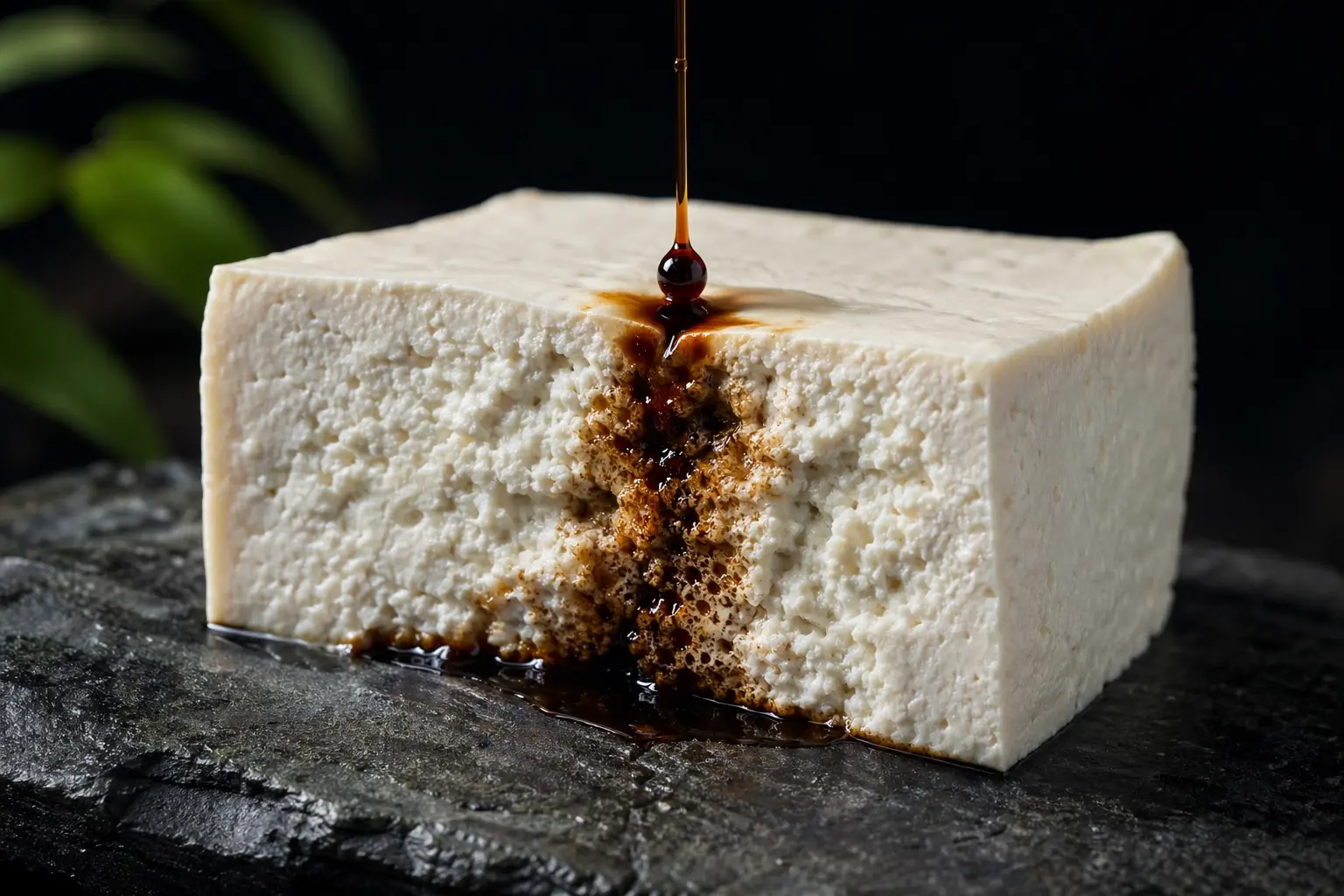
Type Editorial Guide
Linked Ingredients 3
Next Steps 2
There are at least six distinct types of tofu sold in a well-stocked Asian grocery store, and the English labeling system is so inconsistent that "firm" on one package means "will hold its shape in a stir-fry" and "firm" on another means "will disintegrate on contact with hot oil." I learned this by buying every type I could find at the Wellcome in Kennedy Town and cooking them all in the same stir-fry recipe. The results ranged from "restaurant-quality" to "I need to throw this pan away and start over."
"Firm" on a tofu package means nothing. I have tested this. Across six brands available in Hong Kong, the correlation between the English word "firm" and the actual firmness of the tofu inside is approximately zero. Some "firm" tofus are as soft as what another brand calls "silken." Some "silken" tofus are firm enough to survive a gentle braise. The English label is not a specification. It's a marketing suggestion. Trust your fingers, not the label.
The water content determines everything. Tofu firmness is simply a function of how much water is pressed out of the soybean curds during manufacturing. Silken tofu retains about 87% water — it's essentially a soy custard. Pressed tofu (豆干) retains about 40% water — it's almost cheese-like in density. Every type in between represents a different water content, and the water content determines what cooking methods are physically possible and what textures are achievable.
I did this experiment on a Saturday in March 2025, when I was supposed to be cleaning my apartment. Instead, I went to Wellcome, bought six different types of tofu, came home, and spent three hours cooking and tasting. My wife walked into the kitchen, saw six plates of tofu arranged on the counter like a food science exhibit, and walked back out without saying anything.
The Six Types — Ranked from Softest to Firmest
1. Silken Tofu (嫩豆腐, ~87% water) Texture: Custard-like. Wobbles like Jell-O. Melts on the tongue. Best for: Cold dishes (hiyayakko), steaming, gently simmered soups. Worst for: Stir-frying, pan-frying, deep-frying — it will disintegrate. Shopping signal: The package will jiggle when you shake it. If the contents move independently of the container, it's silken. My stir-fry test: Added to a hot wok with oil. Disintegrated completely within 15 seconds. The result was scrambled tofu — edible but unrecognizable as stir-fried. Brand notes: Mori-Nu Silken (shelf-stable, blue box) is the most consistent supermarket version. Wet-market fresh silken is dramatically better — firmer, less watery, with a cleaner soy flavor.
2. Soft Tofu (软豆腐, ~82% water) Texture: Slightly firmer than silken but still delicate. Holds its shape when gently handled but breaks under spatula pressure. Best for: Mapo Tofu (if you have the technique), gentle braising, soups. Worst for: Stir-frying, pan-frying — will break into fragments. Shopping signal: Hard to distinguish from silken by appearance. The label is the only reliable guide, and even then, "soft" and "silken" are often used interchangeably. My stir-fry test: Survived about 25 seconds before breaking apart. The cubes fractured along internal lines rather than disintegrating completely. Tasted fine but looked terrible. Brand notes: House Foods "Soft" (blue and white package with Japanese text) is the most reliable supermarket version I've found.
3. Medium-Firm Tofu (中豆腐, ~75% water) Texture: Springy, slightly resistant to pressure. Holds its shape during cooking but has a tender, custard-like center. Best for: Mapo Tofu (my recommended type for Western kitchens), light stir-frying, braising. Worst for: Deep-frying, aggressive stir-frying. Shopping signal: The package will feel like a firm pillow — some give, but definite resistance. My stir-fry test: Survived the full stir-fry sequence intact. The exterior browned nicely. The interior remained tender. This is the type I recommend for 80% of tofu dishes. Brand notes: House Foods "Medium Firm" (red label, not blue) is my daily driver. Available at Wellcome for $12 HKD.
4. Firm Tofu (老豆腐, ~60% water) Texture: Dense, spongy, resilient. Can be sliced, diced, fried, flipped, and stirred without breaking. Best for: Stir-frying, pan-frying, deep-frying, grilling. Worst for: Cold dishes (too chewy), soups where you want silky texture. Shopping signal: Feels like pressing on a block of feta cheese — firm, minimal give. My stir-fry test: Fried beautifully. Golden brown crust. Held shape perfectly. The interior was slightly less tender than medium-firm but the structural integrity was unmatched. Best for dishes where you want the tofu to be the star. Brand notes: Wet-market firm tofu (sold loose in plastic bags, still slightly warm) is the superior product. Supermarket vacuum-sealed firm tofu is adequate but noticeably drier.
5. Extra-Firm Tofu (超硬豆腐, ~50% water) Texture: Very dense, almost meaty. Minimal water content. Chewy rather than tender. Best for: Deep-frying, heavy braises, dishes where you want the tofu to stand up to aggressive cooking. Worst for: Any dish where tenderness is desired. Shopping signal: Feels like pressing on a block of cheddar — hard, almost no give. My stir-fry test: The exterior browned well. The interior was dry and slightly crumbly. Not my preference for stir-fry — the texture was more like overcooked chicken than properly cooked tofu. Brand notes: I don't keep this type regularly. The practical difference between firm and extra-firm is small enough that I use firm for everything.
6. Pressed/Dried Tofu (豆干, ~40% water) Texture: Chewy, almost meat-like. Dense and rubbery when cold, softens when heated but retains chewiness. Best for: Cold sliced dishes, mincing into dumpling fillings, stir-frying with strong sauces. Worst for: Anything where you want a tender, custard-like interior — this tofu has no custard dimension. Shopping signal: Sold in vacuum-sealed packages, often pre-seasoned (five-spice, soy sauce). Feels like pressing on a pencil eraser — firm but slightly springy. My stir-fry test: Interesting. The texture was completely different from any other type — chewy, meaty, almost like a firm mushroom. The sauce didn't penetrate deeply. Good as a texture contrast in a dish with other soft elements, but not satisfying as the primary protein. Brand notes: The pre-seasoned versions (five-spice, soy-sauce braised) are ready-to-eat snacks. Slice them thin, add chili oil, and serve cold.
The Practical Takeaway
If you cook Chinese food at home, you need two types of tofu:
- One block of medium-firm: for Mapo Tofu, stir-fries, and most cooking applications
- One box of silken: for cold dishes, steaming, and soups
That's it. Six types at the store. Two types in your fridge. The other four are for specific dishes you'll encounter as you go deeper into Chinese cooking, but 90% of home-cooked tofu dishes use medium-firm or silken.
Common Mistakes
Buying silken tofu for stir-frying because the package says "firm." Mori-Nu "Firm Silken" is a real product. It is silken tofu — high water content, custard-like texture. It will not survive a stir-fry. The word "firm" on a silken tofu package means "firm for a silken tofu," not "firm enough to stir-fry."
Assuming all white blocks in the refrigerated section are interchangeable. They are completely different products. The packaging looks similar. The internal structure is fundamentally different. Read the label. Better yet, use the three-finger press test.
Buying pressed tofu expecting it to behave like firm tofu. Pressed tofu is a separate product — chewy, dense, and designed for completely different applications than firm tofu. Using pressed tofu in a dish that calls for firm will give you a chewy, rubbery result.
FAQ
Q: What's the three-finger test? Pick up the package. Press three fingers against the plastic over the center of the tofu. Silken: gives like a water balloon. Medium-firm: gives like a firm pillow. Firm: gives like feta cheese. Pressed: gives like a pencil eraser.
Q: Why do brands use the same word for different products? Because there's no international standard for tofu firmness labeling. Each brand uses its own terminology. Japanese brands use "kinu" (silken) and "momen" (cotton-pressed) descriptors. Chinese brands use numbers or visual descriptions. The English translation layer introduces additional inconsistency. The three-finger test works across all brands, all languages, all packaging.
理论基础 / The Science Behind It
Tofu firmness is a function of water content — from 87% (silken) to 40% (pressed). Each percentage determines what cooking methods are physically possible.
The six types of tofu represent an entire sub-system within the food system, each engineered for specific applications.
Continue Exploring
Written by Mike Sang
Digital strategist, fermentation science enthusiast, and student of the Tao. Bridging growth engineering with ancient Chinese food wisdom.
Seasonal Context
Flavor changes with the season. Your cooking should too.
Missing Umami is part of The Way of Nature, a living system connecting food, timing, and seasonal practice.