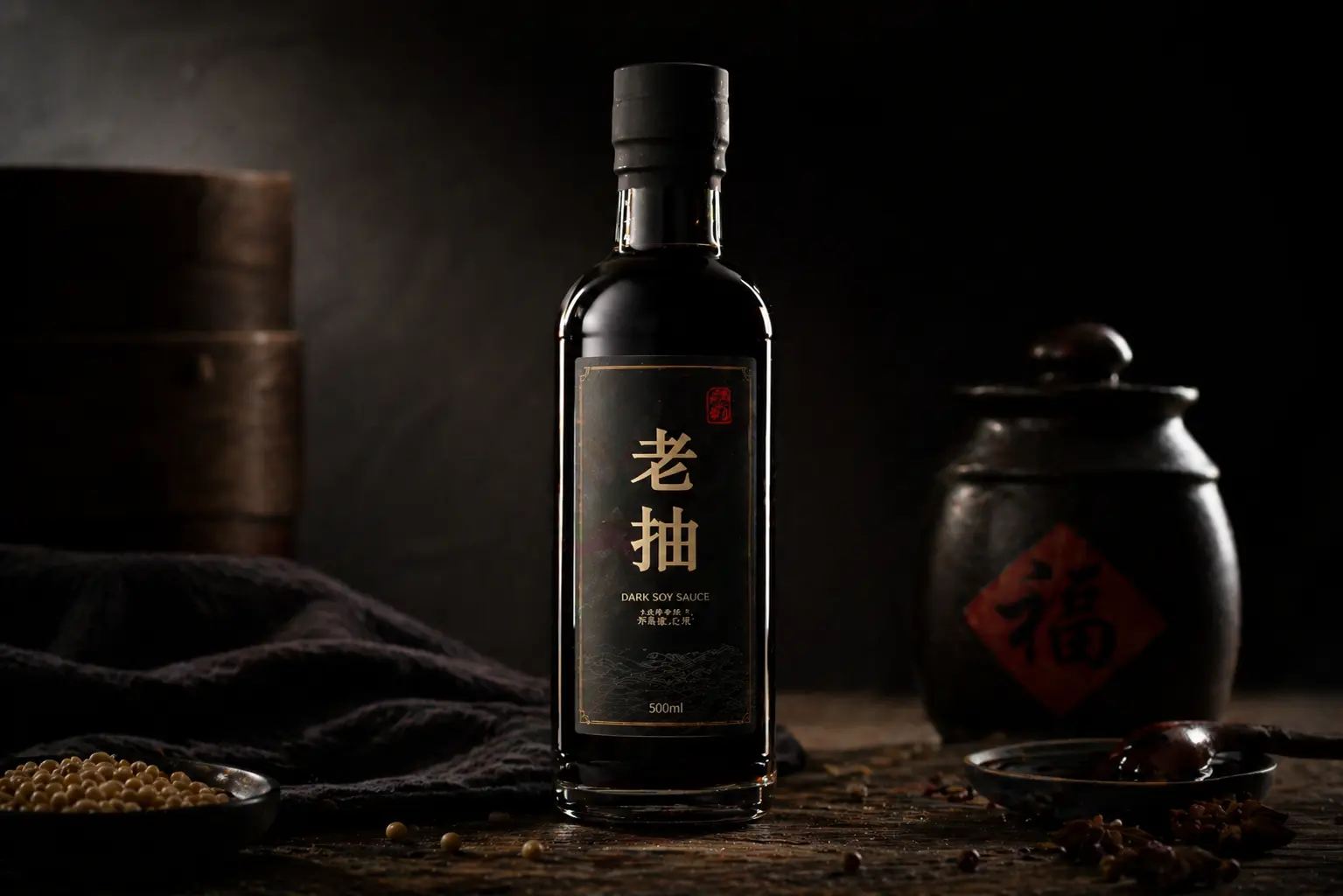
ingredient
Light Soy vs Dark Soy — I Used the Wrong One for Years and Ruined Countless Stir-Fries
Light soy seasons. Dark soy colors. Using the wrong one is the single most common mistake in Chinese home cooking. I made it for two years before a Sichuan-born chef silently corrected me.
Season
Spring
Related Ingredients
Related Dishes
Flavor data not yet available.
Option A
Light Soy Sauce
生抽Role
Seasoning
Saltiness
78/100
Umami
82/100
Sweetness
12/100
Color
25/100 (translucent)
Pours like water
Pours like water
Use for
stir-fry, marinade, dipping
Can I Substitute?
Light soy seasons. Dark soy colors. Buy both. If you can only buy one, buy light soy — you can add sugar and time for color, but you cannot make dark soy taste bright.
Use when you want the flavor profile on the left side of this comparison.
Use when you want the color, body, or texture on the right side of this comparison.
Option B
Dark Soy Sauce
老抽Role
Coloring
Saltiness
60/100
Umami
65/100
Sweetness
42/100
Color
90/100 (nearly black)
Pours like thin honey
Pours like thin honey
Use for
braising, coloring, fried rice
Definition
What It Is
Light soy and dark soy are not interchangeable, not even close, and confusing them is the single most common mistake in Chinese home cooking. I made this mistake for my first two years of cooking Chinese food, using dark soy as an all-purpose seasoning because I thought "dark equals stronger" and I wanted my food to taste strong. What I actually did was make every stir-fry I cooked too sweet, too dark, and fundamentally unbalanced.
Dark soy is not a stronger version of light soy. It's a different product for a different purpose. Light soy is for seasoning — salt and umami. Dark soy is for coloring — a deep, glossy, mahogany finish. Using dark soy to season a stir-fry is like using food coloring to season a soup. You'll get the color. You'll miss the salt and the umami. Your dish will be nearly black, slightly sweet, and taste like it's missing something essential — because it is.
The bottle test: light soy pours like water. Dark soy pours like thin honey. This is the fastest way to tell them apart. If you can see through the liquid when you pour it, it's light soy. If it's opaque, syrupy, and leaves a dark coating on the glass, it's dark soy. The viscosity difference is because dark soy has molasses or caramel added — which is also why it's sweeter. Light soy has no added sweetener — it's pure fermented soybean liquid with salt.
February 2018. Beijing. Lunar New Year's Eve. I was invited to cook at a friend's family dinner — a great honor and, as it turned out, a great humiliation. I was tasked with making red-braised pork (红烧肉), the dish that defines "I know what I'm doing" in a Chinese kitchen. I used the soy sauce I always used — a dark, thick, intensely dark soy sauce that I'd been cooking with for two years. The pork simmered for two hours. I lifted the lid, proud of my work.
The pork was gray. Not rich, glossy mahogany. Not deep reddish-brown. Gray. Like hospital food gray. I had not used dark soy at all. I had used a different dark, thick sauce entirely. The family was polite. My friend's mother lifted the lid, looked at the gray pork, looked at me, and said one word: "老抽呢?" — "Where's the dark soy?"
I didn't have an answer. I didn't know what dark soy was. I had been cooking Chinese food for two years and had never bought a bottle. That night, my friend's mother gave me a 20-minute lecture on the difference between 生抽 (light soy, for seasoning) and 老抽 (dark soy, for color) that I have never forgotten. She ended the lecture by handing me a bottle of each and saying, in English so I couldn't miss it: "Buy both. Use both. Never confuse them again."
The Practical Guide — When to Use Which
| Dish | Light Soy | Dark Soy | Why |
|---|---|---|---|
| Stir-fried vegetables | Yes — 1 tbsp | No | Dark soy muddies bright green vegetables, makes them look overcooked |
| Fried rice | Yes — 1 tbsp | Optional — 1 tsp | Dark soy gives fried rice its characteristic golden-brown color |
| Red-braised pork | Yes — 2 tbsp | Yes — 2 tbsp (essential) | Dark soy builds the deep mahogany color; light soy provides salt-umami |
| Mapo Tofu | Yes — 1 tbsp | No | The color comes from doubanjiang; dark soy adds unnecessary darkness |
| Kung Pao Chicken | Yes — 1.5 tbsp | No | The vinegar and soy balance is calibrated for light soy's brightness |
| Dipping sauce | Yes — 1 tbsp | No | Dark soy is too thick and sweet when raw; it doesn't work in cold applications |
| Marinade | Yes — 1 tbsp | A few drops | Dark soy adds color to the meat surface, improving appearance after cooking |
| Lo Mein / Chow Mein | Yes — 1 tbsp | 1 tsp | Dark soy tints the noodles a appetizing golden-brown |
The rule of thumb: if the dish is primarily brown or red (braises, fried rice, noodle dishes), dark soy adds value. If the dish is primarily colorful (stir-fried vegetables, Mapo Tofu, Kung Pao), light soy only. When in doubt, use only light soy. Dark soy is never essential for flavor. It's essential for appearance.
What I Keep in My Kitchen
I keep three soy sauce products in my Hong Kong kitchen at all times:
Light soy — Lee Kum Kee Premium (green cap): My daily driver. Used in 90% of dishes. $22 HKD.
Dark soy — Haitian Black Label: Thick, glossy, almost syrupy. Used specifically for red braising and fried rice, about twice a week. $18 HKD.
Pearl River Bridge Superior Light Soy: A backup light soy that's slightly saltier and has a more assertive fermented character. I use it for marinades and dishes where the soy sauce is the dominant flavor. $15 HKD.
I do not keep tamari, coconut aminos, or "all-purpose soy sauce." The three-bottle system covers every dish I cook.
FAQ
Q: What happens if I use dark soy instead of light soy in a stir-fry? Your dish will be nearly black, slightly sweet, and lacking in salt and brightness. The dark soy will provide color but not enough umami or salt for proper seasoning. If you realize this mid-cooking, add salt (about 1/4 tsp per tablespoon of dark soy used) and a splash of light soy if available. The dish will be darker than intended but salvageable.
Q: Can I use light soy instead of dark soy in a braise? Yes, but you'll lose the deep mahogany color. The dish will taste correct but look pale. To compensate: use sugar (caramelization during braising provides some color) and extend the braising time (longer cooking darkens the sauce through reduction). The result won't look restaurant-quality, but it will taste right.
Q: What's the difference between Chinese dark soy and Indonesian kecap manis? Kecap manis is a sweet soy sauce — significantly sweeter than Chinese dark soy, with added palm sugar. It pours like syrup and tastes distinctly sweet. It's not a substitute for Chinese dark soy; it will make your dish taste sweet instead of savory. Use it for Indonesian dishes only.
Q: Do I really need both? If you only cook stir-fries — vegetables, simple meat dishes, quick weeknight dinners — light soy alone is enough. If you ever make red-braised dishes (红烧肉, 红烧排骨), fried rice, or noodle dishes — you need dark soy. The color it provides is not cosmetic. It's part of the dish's identity. Red-braised pork that's gray instead of mahogany is a failed dish.
理论基础 / The Science Behind It
Both light and dark soy begin as fermented soybeans. The difference is in the aging and additives: light soy is first-press umami, dark soy is aged with caramel for color.
→ 发酵势在必行 / The Fermentation Imperative
Knowing when to use light vs dark soy is foundational food domain knowledge — the kind of distinction that separates good Chinese cooking from great.
⚠️ Common Mistakes
- • Problems with Light Soy vs Dark Soy — I Used the Wrong One for Years and Ruined Countless Stir-Fries? Diagnose the issue ->
Application
Best Uses
Best Used For
- No best-use data loaded yet.
Avoid Using It For
- No avoid-list loaded yet.
Dishes
Dishes That Use This
Shelf Reading
How to Spot It
Use these shelf cues to identify the right bottle, jar, or bag before you ruin dinner with the wrong one.
Status
No shelf clues loaded yet.
Compare First
Compare Before You Swap
Option A
Light Soy Sauce
生抽Role
Seasoning
Saltiness
78/100
Umami
82/100
Sweetness
12/100
Color
25/100 (translucent)
Pours like water
Pours like water
Use for
stir-fry, marinade, dipping
Can I Substitute?
Light soy seasons. Dark soy colors. Buy both. If you can only buy one, buy light soy — you can add sugar and time for color, but you cannot make dark soy taste bright.
Use when you want the flavor profile on the left side of this comparison.
Use when you want the color, body, or texture on the right side of this comparison.
Option B
Dark Soy Sauce
老抽Role
Coloring
Saltiness
60/100
Umami
65/100
Sweetness
42/100
Color
90/100 (nearly black)
Pours like thin honey
Pours like thin honey
Use for
braising, coloring, fried rice
Substitutes
Emergency Replacements
Status
No dedicated substitute article is loaded for this ingredient yet.
If It Failed
If the Swap Went Wrong
Buying Guide
Best Brands to Look For
Status
No brand notes loaded yet.
Related
Related Ingredients
Tools
Useful Tools
Next Step
Continue the Flavor Trail
Continue from this ingredient into the broader flavor cluster, a substitution decision, or a failure diagnosis.
Written by Mike Sang
Digital strategist, fermentation science enthusiast, and student of the Tao. Bridging growth engineering with ancient Chinese food wisdom.
Seasonal Context
Flavor changes with the season. Your cooking should too.
Missing Umami is part of The Way of Nature, a living system connecting food, timing, and seasonal practice.