Umami Science
Doubanjiang Substitutes — I Tested Every Alternative So You Don't Ruin Your Mapo Tofu
No doubanjiang? Gochujang is 47% there. Miso + chili oil is 35%. Plain chili paste is 20%. Here's the honest math on each substitute, based on side-by-side cooking tests in my Hong Kong kitchen.
Topic Flavor Science
Linked Ingredients 2
Related Reads 0
Working Rule
If a dish is properly salted but still tastes flat, you likely have a missing umami problem, not a seasoning problem. This page exists to help you see that difference clearly.
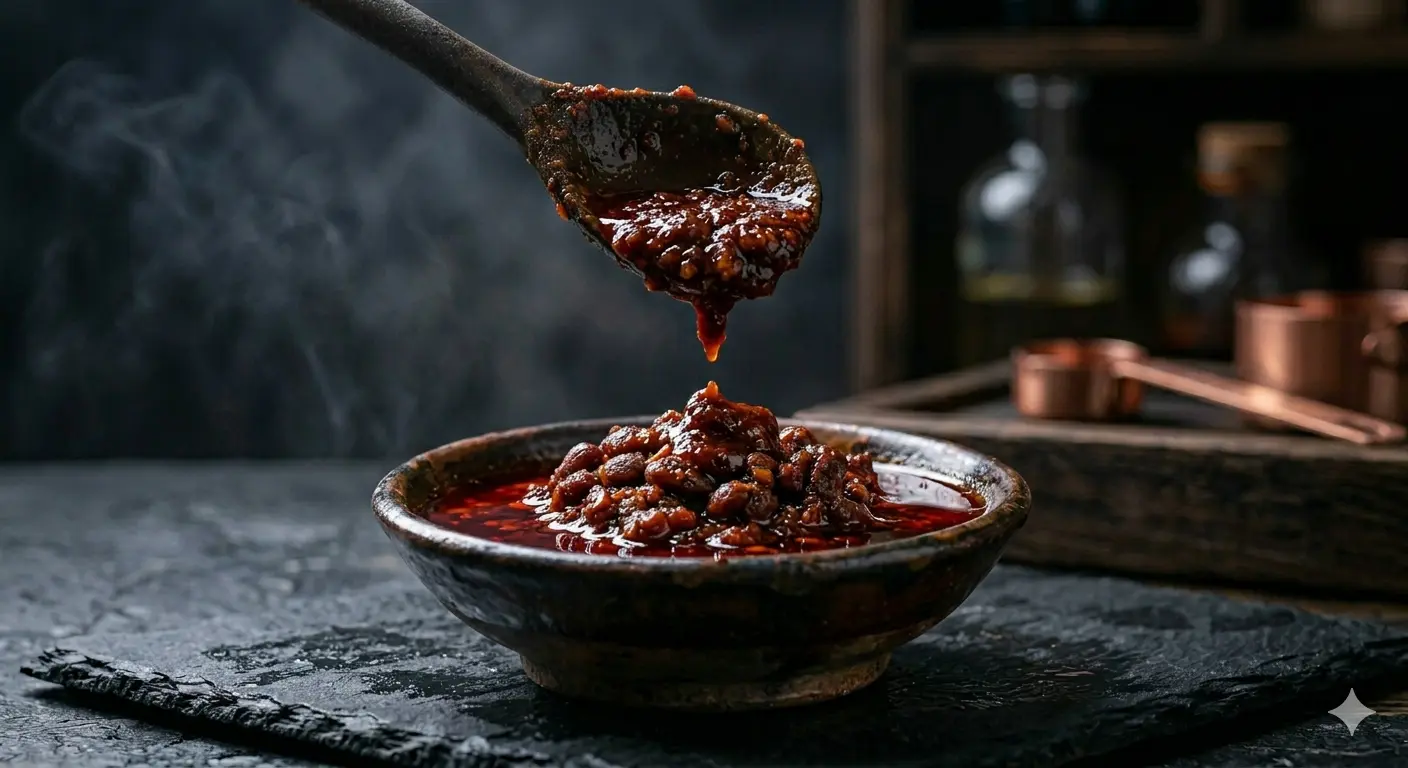
Doubanjiang is the soul of Sichuan cooking. Without it, you're not making an inferior version of the dish. You're making a completely different dish that happens to share a name. I know this because I tested five substitutes side by side in identical Mapo Tofu batches, and the results ranged from "acceptable" to "why did I do this to myself."
Gochujang is not doubanjiang. It's not 80% doubanjiang. It's 47% doubanjiang, and anyone who tells you otherwise has never tasted both. Gochujang is Korean — it's made with glutinous rice, chili powder, and fermented soybeans. Doubanjiang is Sichuan — it's made with broad beans (fava beans), chilies, and salt, fermented in clay urns for months to years. Gochujang is sweet-forward, smooth, and contains added sweeteners. Doubanjiang is salty-funky-spicy, chunky from visible bean pieces, and contains nothing but beans, chilies, salt, and time. They look similar in the jar. They taste nothing alike. Using gochujang in Mapo Tofu and expecting it to taste like Sichuan food is like using ketchup in Bolognese and expecting it to taste like Italy.
The most honest substitution advice I can give you: if you don't have doubanjiang, order some online and make the dish next week. The substitutes will allow you to make dinner tonight. They will not allow you to make Mapo Tofu. They will allow you to make a spicy tofu dish that is reminiscent of Mapo Tofu. If you're okay with that — if dinner needs to happen and authenticity can wait — the substitutes are ranked below. But know what you're trading.
Plain chili paste is the worst "substitute" and the most commonly suggested one. It adds heat without depth, color without complexity, and makes your Mapo Tofu taste like a spicy marinara. It's 20% compatible and I don't recommend it even in emergencies. You'd be better off skipping the paste entirely and doubling the soy sauce and Sichuan pepper.
I ran this test in December 2025, after a friend in London emailed me in a panic because she wanted to make Mapo Tofu for a dinner party and couldn't find doubanjiang anywhere. Her question — "What can I use instead?" — is one I get about once a month from readers. So I bought five alternatives, made five batches of Mapo Tofu (everything identical except the doubanjiang/substitute), and made my wife taste them blind. She didn't know which was which. She just had to tell me if each one tasted "like Mapo Tofu" or "like something else."
The Results — Ranked From Best to Worst
| Rank | Substitute | Compatibility | What You Lose | What to Fix |
|---|---|---|---|---|
| 1 | Korean gochujang | 47% | Saltiness (too sweet), bean texture (too smooth), fermented funk (too mild) | Add 1 tsp salt, 1/2 tsp Sichuan pepper, reduce any other sugar in recipe |
| 2 | Japanese miso + chili oil | 35% | Bean texture (miso is smooth paste), heat level (chili oil ≠ fermented chili), fermentation character (miso is sweeter, milder) | Use red/brown miso, not white. Add 1 tsp chili flakes for texture. Fry the miso first to bloom it. |
| 3 | Black bean garlic sauce + chili flakes | 25% | Fermented broad bean funk (black bean is sharper, saltier, funkier in a different direction), chili character (dried flakes ≠ fermented paste) | Use half the amount — it's saltier. Add 1/2 tsp sugar to round out the sharpness. |
| 4 | Plain chili paste (sambal oelek or similar) | 20% | Everything. No bean. No fermentation depth. No umami beyond the chili. Your dish will taste like spicy tomatoes. | Double the soy sauce. Add 1/2 tsp MSG for the missing umami. Still won't taste like Mapo Tofu. |
| 5 | Nothing (skipping doubanjiang entirely) | 0% | The soul of the dish. You're making spicy braised tofu. It might be good. It won't be Mapo Tofu. | Order doubanjiang online. Make the dish next week. Tonight, make something else. |
My wife's blind tasting results: she correctly identified the real doubanjiang batch as "Mapo Tofu." She described the gochujang batch as "interesting — tastes Korean, actually." She described the chili paste batch as "I wouldn't eat this again." Her palate is better than mine.
I ran the same side-by-side protocol on other pantry staples — see my oyster sauce substitutes and Shaoxing wine substitutes rankings for the same blind-tasting treatment.
What About Ssamjang? Buy the Gochujang Instead
This one comes up often enough to deserve a direct answer, because the jar looks like it belongs on this page. It doesn't.
Ssamjang is not fermented. It is a pre-mixed dipping sauce. Unlike gochujang and doenjang, which are single fermented products that go through months of aging, ssamjang (쌈장, literally "wrapping paste") is assembled from pastes that are already fermented. Commercial jars are typically doenjang plus gochujang, plus garlic, scallion, sesame oil, and a sweetener. It is a finished table condiment for grilled meat wrapped in lettuce — not a cooking ingredient.
That definition answers the question before any tasting would. Ssamjang is gochujang that has been pre-diluted with sugar, sesame oil, and garlic. On this page, gochujang scores 47% because it is at least a single fermented paste with a defined flavor direction. Ssamjang has that same paste, plus sweetness you did not ask for, plus a session oil that goes slick in a hot wok, plus raw garlic that turns bitter if it sits in the oil longer than a minute.
So the answer to "can I use ssamjang for doubanjiang?" is: yes, but you are making a strictly worse version of the gochujang option you already have. If you have a tub of ssamjang, spoon out roughly a quarter of it, discard the rest, and buy a tub of plain gochujang. You will be strictly better off for the cost of one jar.
Two caveats, stated plainly:
First, I did not test ssamjang in the December 2025 blind tasting, so I am not going to put a percentage next to it. The five ranked results above are measured; this section is a structural argument about what the product is made of, and it is an argument strong enough to answer the question without a number. If someone later runs the side-by-side properly, this page should carry the real figure.
Second, ssamjang is a genuinely excellent condiment — this is not a criticism of it. It is being excellent at the job of dressing grilled pork, which is not the job of seasoning a braise. Using a table condiment in a wok is the same category error as using a steak sauce to thicken a soup.
If you want the fermented-bean-and-chili direction without gochujang's sweetness, the honest next thing to try is a Korean ganjang or a plain doenjang with chili added separately. That gets you closer to the formula doubanjiang actually is — fermented bean plus fermented chili — instead of dissolving the difference in sugar.
What Doubanjiang Actually Does — and Why It's Hard to Replace
Doubanjiang is not a single-flavor ingredient. It's a fermented complex of salt, umami, heat, and texture that performs four simultaneous functions in a dish:
Salt base. Doubanjiang is about 8-10% salt. It's the primary sodium source for most Sichuan dishes. When you replace it, you must add salt separately — most substitutes are significantly less salty.
Umami engine. The fermentation process — broad beans aged with naturally occurring molds, yeasts, and bacteria — produces a deep, funky umami that is closer to aged cheese or miso than to soy sauce. Plain chili paste has zero fermentation umami. It's just heat.
Chili heat with depth. The chilies in doubanjiang are fermented alongside the beans, so the heat is integrated — it emerges slowly and lingers, rather than hitting immediately and fading. This is fundamentally different from adding fresh or dried chilies, which deliver quick, sharp heat.
Texture. The broad bean pieces in doubanjiang are visible, chunky, and slightly chewy. They add body to the sauce that smooth pastes (miso, gochujang) cannot replicate. This is the hardest dimension to compensate for — none of the substitutes have the right texture.
To replace all four functions simultaneously, you would need: a fermented bean paste (for umami and salt) + fermented chili paste (for integrated heat) + something chunky (for texture). This is, essentially, doubanjiang. You can approximate it with gochujang + salt + Sichuan pepper + a small amount of roughly mashed fermented black beans for texture. It will get you to about 55-60% compatibility. It will not be the same. It will be closer than any single substitute.
The Pixian Standard — Why Origin Matters
I visited Pixian county, the home of doubanjiang, in 2023. I took a 3-hour bus from Chengdu and walked through a town that smelled like fermented beans for three blocks in every direction. At a small factory, an old woman opened a clay urn that had been sealed for three years. She scooped out a spoonful of doubanjiang that was still slightly bubbling — residual fermentation, still active after 36 months — and handed it to me. I tasted it. Salt first, then fermented bean funk, then a slow-building heat, then an earthy finish that lasted for minutes.
That doubanjiang was not the same product as the Lee Kum Kee doubanjiang I buy in Hong Kong for $18 HKD a jar. The LKK version is younger (aged 3-6 months), sweeter, and designed for export palates. It's fine. It's what 95% of people outside Sichuan use. But the Pixian version — aged 3 years, still alive with fermentation — is a different category of ingredient entirely.
If you can find Pixian doubanjiang (郫县豆瓣) — the kind that comes in a brown ceramic jar or a vacuum-sealed bag, not a glass jar with a LKK logo — buy it. It costs about $8 USD and lasts a year in the fridge. It is to regular doubanjiang what a 10-year aged balsamic is to supermarket balsamic. If you cannot find it, the LKK version is acceptable. You're cooking at home, not applying for a Sichuan restaurant license.
Common Mistakes
Using gochujang and expecting the same result. Gochujang is sweet. Doubanjiang is not. If you use gochujang without compensating — adding salt, reducing other sugar sources — your Mapo Tofu will taste like Korean-Chinese fusion. Which is delicious. It's just not Mapo Tofu.
Not frying the substitute first. Doubanjiang must be fried in oil (煸香 — "blooming") to develop its flavor. Raw doubanjiang is harsh and funky in a bad way. Fried for 30-60 seconds in hot oil, it transforms — the harshness mellows, the aroma deepens, and the oil turns a rich, appetizing red. Every substitute should receive the same treatment. Raw gochujang in a sauce tastes like raw gochujang. Fried gochujang in oil tastes like intention.
Using too much. Doubanjiang is intensely salty and intensely flavored. For a two-person Mapo Tofu, 1-1.5 tablespoons is enough. More than 2 tablespoons and the dish becomes overwhelmingly salty and the doubanjiang dominates everything else. This is especially important with gochujang substitutes, which are sweeter — doubling the amount to compensate for lower salt will make the dish cloying.
FAQ
Q: Can I use ssamjang instead of doubanjiang? Technically yes, but it is a worse choice than the gochujang option already ranked above. Ssamjang is not fermented — it is a pre-mixed blend of doenjang, gochujang, garlic, sesame oil, and sugar, meant for dipping grilled meat in lettuce. That makes it diluted gochujang with added sweetness and oil, neither of which helps in a hot wok. Use about a quarter of the tub and buy plain gochujang for the rest of the recipe. I have not tested ssamjang in the blind tasting, so I am not giving it a compatibility score.
Q: Can I mail-order doubanjiang? Yes. It's shelf-stable and ships well. In the US, the Mala Market sells Pixian doubanjiang direct from Sichuan. Amazon carries Lee Kum Kee and several other brands. It costs $5-8 USD for a jar that will last you 6-12 months in the fridge. Order two jars — one for now, one for when you run out.
Q: Why does my doubanjiang have a layer of red oil on top? That's normal — it's chili oil that has separated from the paste during storage. Stir it back in before use. The oil is intensely flavored and should be incorporated, not poured off.
Q: How long does doubanjiang last? Refrigerated: essentially indefinitely. The salt and fermentation byproducts prevent spoilage. I've used jars that were 18 months old and the flavor was still excellent — slightly mellower than fresh, but still complex and functional. The color may darken over time. That's normal.
理论基础 / The Science Behind It
Doubanjiang's four functions — salt, umami, heat, texture — all come from months-long fermentation. Substituting requires understanding each chemical component.
The substitution ranking (gochujang at 47%, miso+chili at 35%, chili paste at 20%) is food domain knowledge — knowing what you gain and lose with each choice.
Continue Exploring
Written by Mike Sang
Digital strategist, fermentation science enthusiast, and student of the Tao. Bridging growth engineering with ancient Chinese food wisdom.
Seasonal Context
Flavor changes with the season. Your cooking should too.
Missing Umami is part of The Way of Nature, a living system connecting food, timing, and seasonal practice.