Editorial Guide
How to Judge Spice Freshness — The Tests I Use Before Every Dish
Most dried spices in the average kitchen are dead — not expired in a food-safety sense, but dead in the sense that they've lost all their volatile flavor compounds. Here's how to tell, spice by spice, before you ruin dinner.
Why Read This
This page is meant to connect history, flavor logic, and actionable kitchen judgment. It is not recipe filler. It is here to explain the mechanism behind the taste.
The single most common cooking mistake I diagnose is not technique. It's not ingredient substitution. It's dead spices. A jar of cumin that's been in the cabinet since 2022. A bag of Sichuan pepper from a bulk bin, exposed to air and light for an unknown duration. Five-spice powder that your mother-in-law gave you three years ago and you've never opened. These spices are contributing color and texture to your food. They are contributing zero flavor.
Spices don't "go bad" in a food-safety sense. They "go dead" in a flavor sense. The volatile organic compounds that give spices their aroma and taste — the essential oils in cumin, the hydroxy-alpha-sanshool in Sichuan pepper, the cinnamaldehyde in cinnamon — evaporate, oxidize, and degrade over time. A spice that's 18 months past its prime won't make you sick. It will make your food taste like nothing.
The most reliable freshness test is not your eyes. It's your nose and your tongue. Visual inspection tells you nothing useful. A dead Sichuan peppercorn looks identical to a fresh one. The color may fade slightly, but the color is carried by non-volatile pigments that outlast the flavor compounds by months. The nose can detect volatile aromatics that your eyes cannot see. The tongue can detect a numbing compound that has no visible signature at all.
I started systematically testing my spice collection in early 2025, after I served a Sichuan dinner where nobody's mouth went numb. I had used "enough" Sichuan pepper. The pepper was simply dead — 18 months old, purchased from a bulk bin, stored in a glass jar on a shelf near the stove. Every factor that accelerates degradation was present. The dinner was spicy. It was not Sichuan. That was the night I threw out half my spice cabinet and started researching freshness.
The Freshness Tests — Spice by Spice
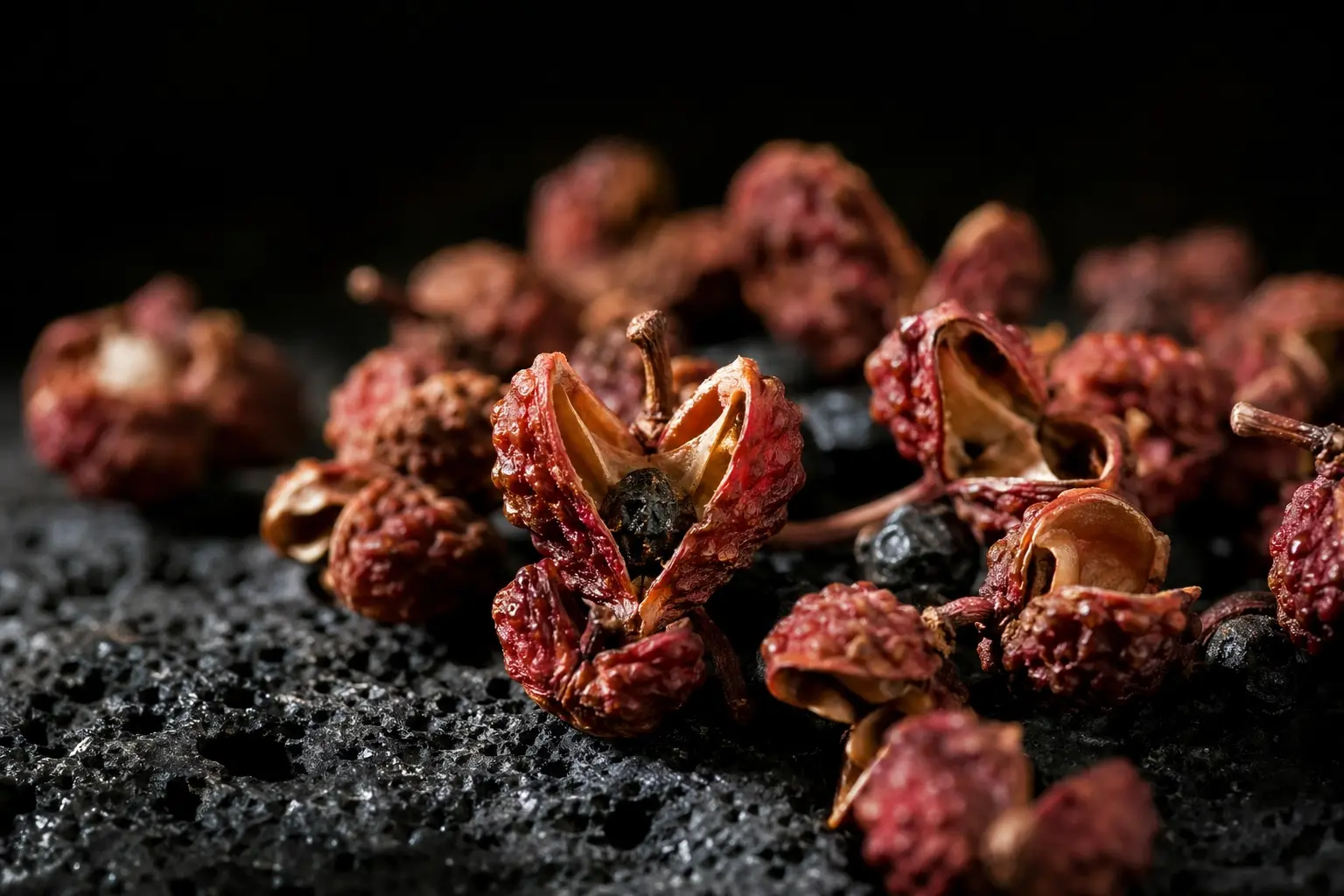
Sichuan pepper: Place one husk on your tongue. Close your mouth. Count to five. Tingle within 3 seconds = alive. Tingle within 5 seconds = aging, use within a month. Warmth after 10 seconds = mostly dead, double the amount. Nothing after 10 seconds = dead, throw it away. This is the most reliable test I use because it measures the specific active compound (hydroxy-alpha-sanshool) rather than general aromatic intensity.
Cumin, coriander, fennel (whole seeds): Rub a pinch between your palms for 5 seconds. Smell your palms. If the aroma is immediate, strong, and identifiable — the spice is alive. If you have to bring your palms to your nose to detect anything — the spice is fading. If you smell nothing — dead.
Five-spice powder, curry powder (ground blends): Ground spices degrade 3-5x faster than whole because the grinding process exposes vastly more surface area to air. Smell the jar directly. If the aroma has a single dominant note (usually cinnamon or star anise in five-spice powder) and lacks complexity, the more volatile components have evaporated and you're smelling only the most stable compounds. Replace ground spices every 6 months.
Dried chilies: Break one in half. Smell the interior. The volatile capsaicinoids are trapped inside the chili and protected from air exposure. If the interior smells aggressively spicy — good. If it smells vegetal and muted — the volatile compounds have degraded. The chili will still provide some heat but dramatically less than a fresh one.
Star anise, cinnamon (whole): These are the most durable spices because their active compounds (anethole, cinnamaldehyde) are relatively stable molecules. Whole star anise and cinnamon sticks can last 2-3 years with minimal degradation. Smell test: should be immediately identifiable from 15cm away.
The Storage System That Works
After throwing out half my spice cabinet in 2025, I rebuilt my storage system with three principles:
1. Buy whole, grind as needed. Whole spices last 3-5x longer than pre-ground. I buy cumin seeds, Sichuan peppercorns, coriander seeds, and fennel seeds whole. I toast and grind them in a dedicated spice grinder (a $98 HKD electric coffee grinder from the Japanese home goods store that I use exclusively for spices). The difference in aroma between freshly ground cumin and pre-ground cumin from a jar is roughly the difference between fresh coffee and instant.
2. Vacuum-seal or nitrogen-flush for long-term storage. For spices I buy in bulk (Sichuan pepper, cumin), I vacuum-seal the backup supply and freeze it. The cold slows volatile evaporation. The vacuum prevents oxidation. Frozen vacuum-sealed Sichuan pepper is still 90% potent after 12 months.
3. Store in dark, airtight containers, away from heat. Light degrades volatile compounds. Heat accelerates evaporation. The worst place for spices is a glass jar on a shelf above the stove — maximum light, maximum heat. The best place: a dark cabinet, away from the stove, in airtight metal or ceramic containers. I bought a set of small stainless steel tins ($68 HKD for 12) and transferred all my spices out of glass jars. It's not beautiful. It works.
The Replacement Schedule
| Spice | Whole Shelf Life | Ground Shelf Life | Replace Every |
|---|---|---|---|
| Sichuan pepper | 12 months | 3-6 months | Test monthly with tongue test |
| Cumin seeds | 18-24 months | 6 months | 12 months |
| Coriander seeds | 18-24 months | 6 months | 12 months |
| Fennel seeds | 18-24 months | 6 months | 12 months |
| Star anise (whole) | 24-36 months | — | Check annually |
| Cinnamon sticks | 24-36 months | — | Check annually |
| Five-spice powder | — | 6 months | Replace if aroma is single-note |
| Dried chilies | 12-18 months | — | Break and smell before use |
FAQ
Q: Can I revive dead spices by toasting them? No. Toasting releases volatile compounds that are still present in the spice — it intensifies the flavor of a spice that's alive but has been dormant. If the volatile compounds have already evaporated (dead spice), toasting cannot create them from nothing. You'll get a brief burst of toasted aroma, then nothing.
Q: Are expired spices dangerous? No. They won't make you sick. They'll just make your food taste flat. There's no food-safety issue with old spices — only a flavor issue. The "best by" date on a spice jar refers to flavor potency, not safety.
Q: What's the one spice I should always buy fresh? Sichuan pepper. Its active compound is uniquely volatile and degrades faster than almost any other spice compound. Buy vacuum-sealed, store in the freezer, and test with the tongue before every use. A $6 bag lasts 6-12 months. The cost per use is pennies. The cost of dead pepper is a ruined Sichuan dinner.
理论基础 / The Science Behind It
Volatile organic compounds — the molecules that give spices flavor — evaporate, oxidize, and degrade over time. Understanding this chemistry is essential food domain knowledge.
Seasonal ingredient cycles and freshness are central to Chinese cooking philosophy. The ability to judge when an ingredient is at its peak is rooted in this understanding.
Continue Exploring
Written by Mike Sang
Digital strategist, fermentation science enthusiast, and student of the Tao. Bridging growth engineering with ancient Chinese food wisdom.
Seasonal Context
Flavor changes with the season. Your cooking should too.
Missing Umami is part of The Way of Nature, a living system connecting food, timing, and seasonal practice.