Editorial Guide
Starch Slurry Guide — The 30-Second Trick That Fixes Thin Sauces
Cornstarch slurry is the difference between a sauce that pools on the plate and a sauce that clings to every ingredient. Here's the ratio, the timing, and the one mistake that makes everything lumpy.
Type
Editorial Guide
Linked Ingredients
Next Steps
Why Read This
This page is meant to connect history, flavor logic, and actionable kitchen judgment. It is not recipe filler. It is here to explain the mechanism behind the taste.
The difference between a sauce that coats every grain of rice and a sauce that pools sadly at the bottom of the plate is one teaspoon of cornstarch mixed with one tablespoon of cold water. I spent my first year of Chinese cooking wondering why my sauces were thin, watery, and refused to cling to anything, while restaurant sauces were thick, glossy, and adhered to every surface. The answer was cornstarch slurry — and the specific timing of when to add it.
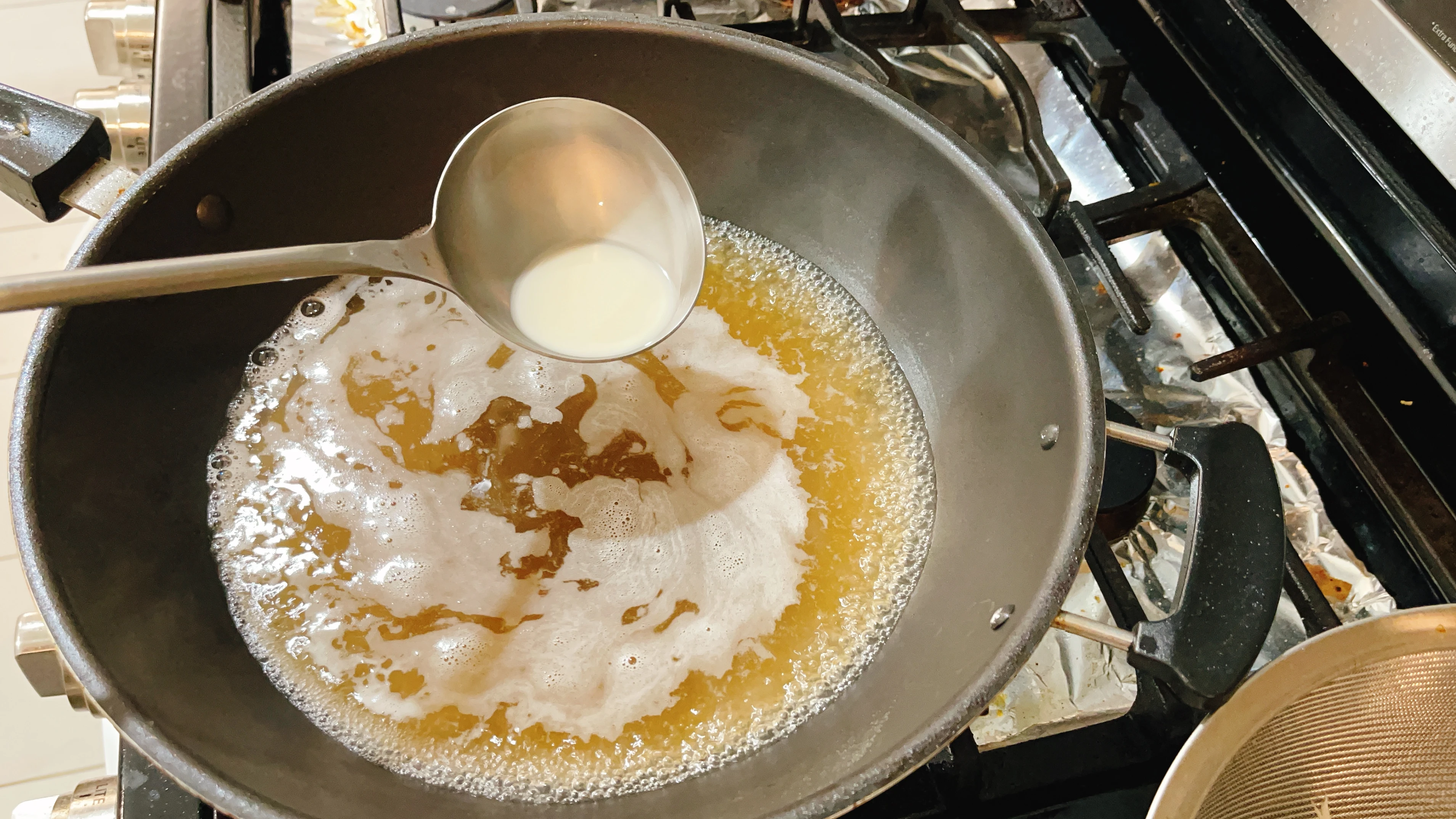
You cannot add dry cornstarch directly to a hot wok. It will clump instantly, forming gelatinous lumps that never dissolve. The starch granules must be suspended in cold water before they encounter heat. This is the step I skipped for months — I'd sprinkle cornstarch directly into the wok, stir frantically, and end up with lumpy sauce. The fix is so simple it's almost embarrassing: mix the cornstarch with cold water in a separate bowl first. Then add the slurry to the wok. That's it. That's the entire technique.
The science: cornstarch granules are microscopic, tightly packed starch molecules that don't dissolve in cold water but do absorb it. When you mix cornstarch with cold water, the granules swell as they absorb water but don't burst. When the slurry hits heat — above about 60°C — the granules burst and release their starch molecules into the surrounding liquid. The starch molecules form a tangled network that traps water, creating a thickened, glossy liquid — the sauce texture you want. This process is called gelatinization.
The Golden Ratio
1 teaspoon cornstarch + 1 tablespoon cold water = thickens about 1 cup of liquid to a light, coating consistency. For a thicker sauce (like the sauce for beef chow fun): 2 teaspoons cornstarch + 2 tablespoons cold water. For a thinner sauce (like a soup or broth): 1/2 teaspoon cornstarch + 1 tablespoon water. The ratio is scalable — double it for larger batches.
The slurry must be mixed immediately before use. Cornstarch settles out of water within about 60 seconds. If your slurry has been sitting for more than a minute, stir it again before adding to the wok. The water at the top will be clear and the cornstarch will be a solid layer at the bottom. Pouring this unmixed slurry into a wok results in mostly water going in first (no thickening) and then a clump of solid cornstarch at the end (lumpy disaster).
The Timing — When to Add Slurry
The slurry goes in after the liquid ingredients — soy sauce, vinegar, wine, stock — and before the food (if you're using the "sauce first, food later" method that restaurants use). Alternatively, you can mix the slurry into the pre-combined sauce before adding it to the wok. I use the pre-mixed approach for most dishes: combine soy sauce, vinegar, wine, sugar, and cornstarch slurry in a small bowl, stir, and add the entire mixture to the hot wok at once. The cornstarch activates as the sauce heats. This is foolproof.
If you add the sauce to a cold or warm-but-not-hot wok, the cornstarch will gel prematurely and the sauce will be thin and separated rather than thick and glossy. The wok must be hot enough that the sauce bubbles immediately on contact. The bubbling indicates that the liquid has reached the gelatinization temperature of cornstarch — about 85-95°C. If it doesn't bubble, the starch hasn't activated and your sauce will be watery.
The Cornstarch vs Other Starches Comparison
| Starch | Thickening Power | Clarity | Stability | Best For |
|---|---|---|---|---|
| Cornstarch | Medium | Clear, glossy | Breaks down with prolonged cooking | Quick stir-fries, sauces added at the end |
| Potato starch | High | Very clear | Breaks down faster than cornstarch | Last-minute thickening, delicate sauces |
| Tapioca starch | Medium | Clear, slightly chewy | More stable than cornstarch | Dishes with longer cooking times, freezing |
| Wheat flour (roux) | Low | Opaque, cloudy | Very stable | Western-style gravies and stews |
For Chinese stir-fries: cornstarch is the standard. When the job is coating instead of sauce — velveting — the same bag is the texture engineer: for the chicken-specific method face-off (baking soda vs egg white vs starch-only), see the Velveting Chicken Guide. I keep a small jar of cornstarch next to my stove at all times. In Hong Kong, it costs about $8 HKD for a 500g bag at Wellcome. A bag lasts me about six months of daily cooking.
FAQ
Q: Can I use flour instead of cornstarch? Yes, but the texture will be different — cloudier, less glossy, and with a slightly floury taste if not cooked long enough. Flour-based thickening is for Western-style gravies and stews. Cornstarch-based thickening is for Chinese stir-fries. Different tools for different jobs.
Q: Why does my sauce thin out after sitting for a few minutes? Cornstarch-thickened sauces break down with prolonged heat or extended standing. This is normal. For dishes that need to hold for more than 10 minutes (like a buffet or meal prep), use a combination of cornstarch (for immediate gloss) and a small amount of xanthan gum (for stability). Or just accept that the sauce will be thinner when reheated and add a fresh slurry.
理论基础 / The Science Behind It
Cornstarch gelatinization — starch granules absorbing water, swelling, and bursting at ~60°C — is the chemistry behind every glossy Chinese sauce.
Continue Exploring
Written by Mike Sang
Digital strategist, fermentation science enthusiast, and student of the Tao. Bridging growth engineering with ancient Chinese food wisdom.
Seasonal Context
Flavor changes with the season. Your cooking should too.
Missing Umami is part of The Way of Nature, a living system connecting food, timing, and seasonal practice.