Comparison
Chinese vs Japanese vs Korean Soy Sauce
Five bottles, five different fermentation logics — not five versions of the same thing. What each country's brewers optimised for, why the wheat ratio explains most of it, and how to swap one for another without wrecking the dish.
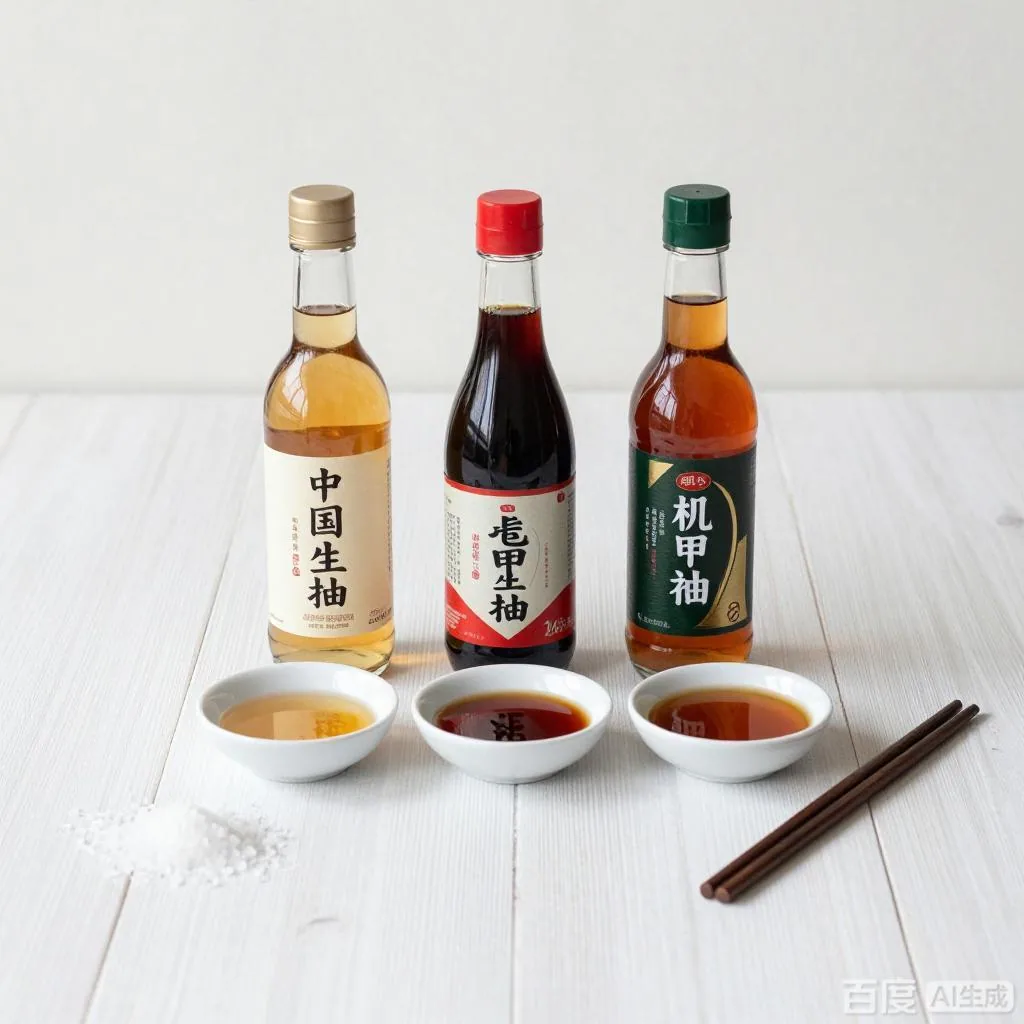
The Dial Wheat Ratio
China Salt + Bean
Japan Aromatic Sweet
Korea Pure Soybean
The Short Version
More wheat means more starch, more sugar, more esters — sweeter, fruitier, more aromatic. Less wheat means more soybean, sharper salt, deeper bean aroma. Japan sits at the wheat end, traditional Korea at the soybean end, and China in between with its own split between light and dark.
Key Takeaways
- The wheat ratio is the invisible dial. More wheat means more starch converting to sugar, which means a sweeter, fruitier, more aromatic sauce (Japan). Less wheat means more soybean, which means sharper salt and a deeper bean aroma (China, traditional Korea).
- You can substitute in a pinch, but never 1:1. Japanese shoyu is sweeter and less salty — cut the sugar and add a little salt. Korean ganjang is saltier and more bean-forward — cut the quantity by around a tenth.
- Colour tells you almost nothing. All three look brown in the bottle. The difference is in the aroma and in how they behave when heated.
- Southeast Asian soy sauces play by different rules. Filipino toyo and Thai dark soy often add caramel or palm sugar directly, so they read sweeter straight from the bottle.
- "Japanese soy sauce" is not one thing. Kikkoman is koikuchi, the everyday style. JAS defines four others, and usukuchi in particular is a worse Chinese-light-soy substitute than koikuchi despite the name.
Six Soy Sauces Compared
The Philippines and Thailand are in here because people search for them alongside the Chinese and Japanese bottles, and because they answer a real kitchen question: why does that soy sauce make a stir-fry taste sweet? The answer is in the ingredient list, not in your imagination.
| Dimension | China Light 生抽 | China Dark 老抽 | Japan Koikuchi 浓口 | Korea Ganjang 간장 | Philippines Toyo | Thailand See ew dam |
|---|---|---|---|---|---|---|
| Main ingredients | Soybeans + wheat (~10–30% wheat) | Same base + caramel colour, often sugar | Soybeans + wheat, roughly equal parts | Traditional: soybeans, no wheat in the classic method Modern (yangjo): soy + wheat or rice | Soy + wheat + caramel colour; mass-market often hydrolysed | Soy + wheat + palm sugar or molasses |
| Fermentation | High-salt liquid state (高盐稀态), sun-aged | Same base, longer aged | High-salt liquid state, temperature-controlled, multi-strain | Traditional: meju blocks in onggi crocks Modern: industrial brewed | Mostly blended or hydrolysed; small-batch fermented exists | Industrial brewed, sugar added after fermentation |
| Colour | Light reddish-brown, transparent | Deep black-brown, viscous | Deep reddish-brown, clear | Medium brown, slightly hazy | Medium-dark brown | Dark brown, syrupy |
| Saltiness | High — the salty workhorse | Medium; less salt per volume than light soy | Medium; the mildest of the three national styles | High; 한식간장 and 국간장 are the saltiest here, and long-aged batches more so | Medium-high, with caramel in the background | Medium on paper — but sugar masks it in the mouth |
| Sweetness | Low; any sweetness is a subtle fermented note | Low to moderate; added sugar in many brands, mild caramel | Moderate; natural sweetness from wheat starch. Honjozo carries no added sugar | Low; traditional is almost savoury-bitter, modern yangjo mildly sweet from grains | Low to moderate; caramel rounds the edge but it is not a sweet sauce | High; palm sugar is a core ingredient |
| Aroma | Forward soy-bean aroma (豉香), savoury, slightly beany when young | Caramel, molasses, roasted notes | Fruity, floral esters and alcohols; a long multi-strain ferment | Pure soybean, a slightly raw fermented note; cleaner than Japanese | Flat salt and caramel, less aromatic depth | Molasses, caramel, palm sugar |
| Quality marker | Amino acid nitrogen ≥0.80 g/100 mL for Special Grade (特级) under GB/T 18186 | Typically lower than light soy — colour is the job, not umami | Total nitrogen ≥1.50 g/100 mL for Special Grade (koikuchi). Only honjozo can claim it | No unified national grade; premium yangjo is identified by total nitrogen | No consistent grading; hydrolysed versions are low in free amino acids | No consistent grading; sugar dilutes protein content |
| Best for | Stir-fries, dipping, cold dishes — the everyday workhorse | Red-braising (红烧), glazing, adding colour | Sashimi, sushi, simmered dishes (nimono), all-purpose Japanese cooking | Soups (guk), namul, marinades, bibimbap | Adobo, dipping sauces, Filipino stews | Pad see ew, stir-fry glazes, dipping |
| Can it stand in for Chinese light soy? | It is light soy | No. It colours but does not salt or add enough umami | Yes, with adjustments — sweeter, less salty, fruitier | Yes, closer than Japanese — saltier, purer bean flavour, less umami depth | It will read noticeably sweeter; cut or drop the added sugar | It will read very sweet and very dark; not a 1:1 substitute |
Two cautions about the numbers. Saltiness is deliberately qualitative — none of the three national standards sets a salt ceiling or a typical value, labels report sodium in different units (mg per tbsp, mg per 100 mL, % by weight), and brands vary widely within one style. Commercial measurements put Chinese soy around the mid-teens as NaCl and Korean 한식간장 well above that, but there is no same-basis table to build. If salt matters to you, read the sodium line on the bottle in your hand. The quality-marker row compares nothing directly: China grades on amino acid nitrogen per 100 mL, JAS grades on total nitrogen in g/100 mL, and those measure different things. They sit side by side only so you can see that each country grades by its own ruler.
Why the Wheat Ratio Explains Most of It
This is the piece most comparison articles skip. Japanese koikuchi does not taste sweet because someone added sugar — honjozo (本酿造) sauce has no added sugar at all. It tastes sweet because it is brewed from roughly equal parts wheat and soybeans, while Chinese light soy leans heavily on soybeans with only a modest wheat fraction.
During fermentation, Aspergillus sojae — the kōji mould used for soy sauce, with A. oryzae also common — does two jobs at once:
- Soybean protein becomes amino acids. Glutamic acid is the one that reads as umami.
- Wheat starch becomes sugars. Glucose and maltose first, then yeast turns them into alcohols and esters — the fruity, floral top notes.
More wheat means more starch, which means more sugar, which means more alcohol and more esters over a long, cool fermentation. That is why koikuchi smells faintly of fruit when the ingredient list says only water, soybeans, wheat and salt. The sweetness is built by microbes, not spooned in.
Chinese light soy gives those microbes much less starch to work with, so what comes out is dominated by soybean umami and salt — direct, sharp, savoury. That is exactly what you want in a stir-fry, where you are looking for soy flavour rather than fruit.
China: The Salt and Umami Workhorse
Chinese light soy (生抽) is built around a single job: delivering salty umami without much colour or sweetness. It is the bottle you reach for when you want a stir-fry to taste like a stir-fry.
Dark soy (老抽) starts from the same base but is aged longer, usually with caramel colour and often sugar. Its job is colour and gloss, not salt — which is why recipes that use both are being deliberate, not redundant. The full split is in light soy vs dark soy.
Grading runs on GB/T 18186, still the 2000 edition in force today, with GB/T 18186-2025 (酱油质量通则) taking over on 1 December 2026. Special Grade (特级) requires at least 0.80 g/100 mL of amino acid nitrogen, stepping down through 一级, 二级 and 三级. Note what that number measures: amino acid nitrogen specifically — how much soybean protein was broken down into free amino acids, which is a good proxy for how much fermentation happened, and nothing at all about what else is in the bottle.
On additives, the two standards differ in ways that are easy to misstate. The Chinese standard permits added MSG and food additives within GB 2760, but requires that they not affect the grade — the amino acid nitrogen has to come from the mash. You will also see 零添加 ("zero added") on Chinese bottles, which refers to that brand's choice rather than a rule. Japan's honjozo category prohibits using acid-hydrolysed amino acid liquid as a protein source, but it is not an additive-free claim: sugar, alcohol and seasonings are all allowed. Neither standard is simply stricter than the other; they regulate different things.
Japan: The Aromatic, Sweeter One
Koikuchi (浓口, "thick mouth") is the great majority of Japanese soy sauce production, and it is what Kikkoman sells. Soybeans and roasted wheat go in at close to a 1:1 ratio, get inoculated with kōji, then ferment in brine for months under controlled temperature with selected yeasts and lactic acid bacteria. If the bottle in your hand is Kikkoman and the recipe is Chinese, that specific swap has its own page: Chinese soy sauce vs Kikkoman.
Three things come out of that fermentation:
- Sugar from starch. Wheat amylases break starch into glucose and maltose, and a meaningful amount of that sugar survives into the finished sauce.
- Fruity esters. Yeast makes ethanol, which reacts with organic acids to form compounds like ethyl lactate and ethyl acetate — the apple, banana and floral notes you can actually smell.
- A softer salt hit. Sodium levels are not dramatically lower than Chinese light soy, but sugar and glutamate round the edge, so it reads as less aggressively salty on the tongue.
JAS grades in three steps — 特級, 上級, 標準 — and grades on total nitrogen, not amino acid nitrogen. For koikuchi the floors are 1.50, 1.35 and 1.20 g/100 mL, alongside colour and salt-free solids thresholds. 特級 is reserved for honjozo; the one exception is saishikomi made by the blended method, which qualifies only if total nitrogen reaches 2.00 and the amino-acid-liquid portion stays under 20% of it. Above 特級 sit two voluntary labels: 特選 needs 10% more nitrogen than 特級, 超特選 needs 20%, and neither may contain added sugar.
That is a different ruler from China's. Amino acid nitrogen measures the free amino acids; total nitrogen measures all nitrogen in the sauce, free or still bound in peptides. A Chinese 特級 at 0.80 and a Japanese 特級 at 1.50 are not the same measurement expressed twice — do not read the gap between those numbers as a quality gap.
Korea: The Soybean-Forward Outlier
Korean soy sauce (간장, ganjang) is the most philosophically different of the three, because the classic method uses soybeans only, with no wheat in the mash.
The traditional method, joseon ganjang (조선간장) or guk ganjang (국간장, "soup soy sauce"), comes from the same fermentation blocks that make doenjang. Soybeans are cooked, pressed into meju blocks, dried and fermented in onggi crocks, then brined and aged. The liquid that separates out is ganjang. Under the Korean Food Code, 한식간장 (Korean-style soy sauce) is defined around meju and brine, with no wheat required — and traditional meju is pure soybean. That is the structural difference from both China and Japan, where wheat is a working ingredient rather than an optional one.
- No wheat means no starch means no fermented sweetness. The flavour is pure soybean — salty, savoury, slightly earthy or bitter, with none of the fruity roundness of Japanese shoyu.
- It is saltier by design. Guk ganjang exists to season soup without darkening the broth. In culinary role it is closer to fish sauce than to Kikkoman.
- Modern ganjang is a hybrid. The bottle marked yangjo ganjang (양조간장, brewed soy sauce) in most Korean groceries has wheat or rice added and is fermented Japanese-style, landing somewhere between the two. Jin ganjang (진간장) is darker and often carries additives, and is the one for stir-fries and braises.
Korea has no single national grading system to match China's GB or Japan's JAS. Premium yangjo ganjang tends to be identified by total nitrogen rather than amino acid nitrogen specifically, which makes the two countries' numbers not directly comparable.
I Only Have Japanese Soy Sauce — Can I Cook Chinese Food?
Yes, with four adjustments. Koikuchi is the most workable stand-in for Chinese light soy: same basic ingredient set, same general method. But it behaves differently in the wok.
- Cut the sugar in the recipe by about half. There is fermented sweetness here that Chinese light soy does not carry. If a stir-fry calls for a teaspoon of sugar, start with half.
- Expect less bean aroma (豉香). The fruity top notes do not replace the deep savoury base Cantonese cooking leans on. A few drops of dark soy or a little oyster sauce puts some of that depth back.
- Expect a darker red-brown, not golden tan. Koikuchi is darker than light soy. For a red-braised (红烧) dish you will still want dark soy for the lacquer.
- Watch the salt. Koikuchi sits slightly lower than Chinese light soy, so if the dish tastes flat, add a pinch of salt rather than pouring more soy — otherwise the sweetness takes over.
And Korean ganjang?
Closer in some ways, trickier in others. Traditional guk ganjang is pure soybean, so the bean flavour is actually nearer Chinese light soy than Kikkoman is. Two catches:
- It is saltier. Cut the quantity by roughly a tenth, or pull salt back elsewhere in the dish.
- It has less umami depth. Without the long multi-strain low-temperature fermentation, the amino acid profile is flatter. A pinch of sugar or a dash of oyster sauce rounds it out.
- Modern yangjo ganjang behaves much more like koikuchi — treat it the same way.
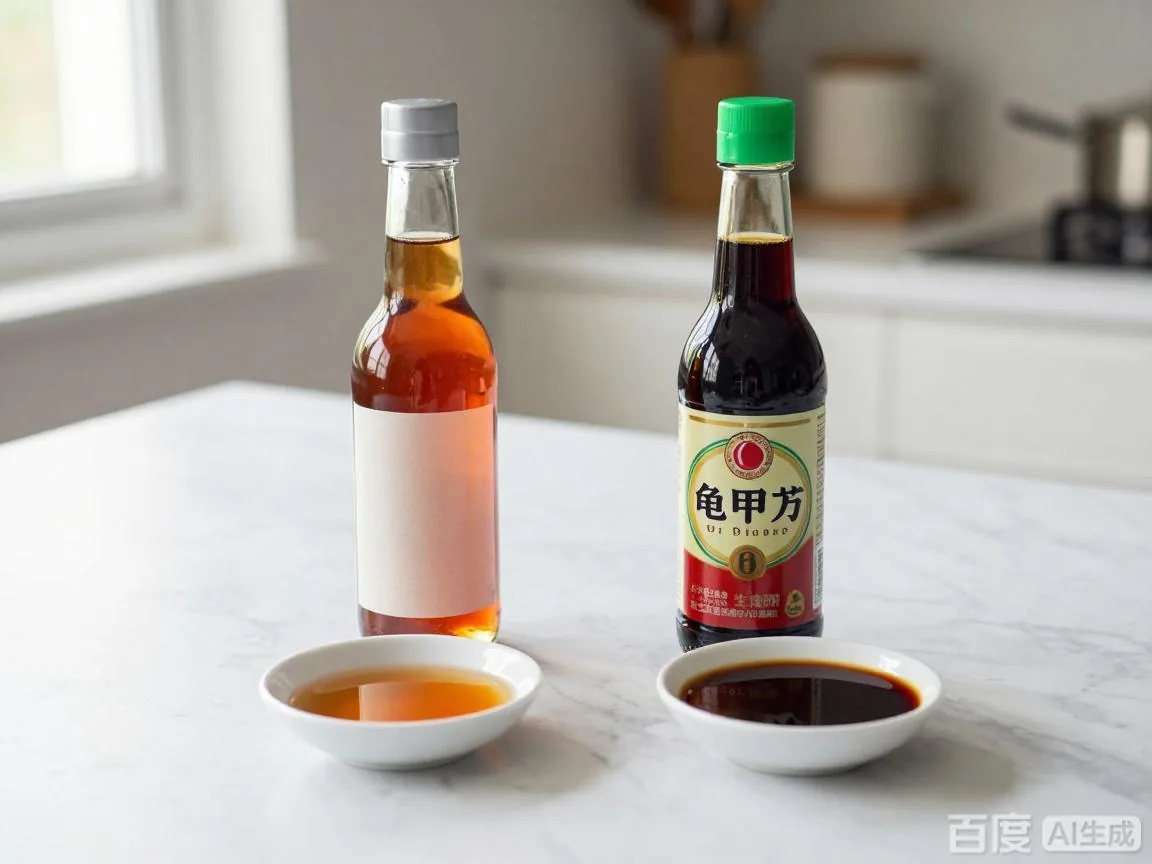
When to Reach for Which
| Situation | Reach for | Why |
|---|---|---|
| Cantonese stir-fry, garlic sprouts, beef chow fun | Chinese light soy | Clean salt and umami, no sweetness to muddy the wok |
| Dumpling dip, white-cut chicken | Chinese light soy | The dipping sauce wants salt, not sugar or colour |
| Cold dishes (liangban) | Chinese light soy | Bright and savoury; dark soy would make it heavy |
| Red-braised pork, glazed wings | Light soy + a little dark | Dark soy alone under-salts; light soy alone never darkens |
| Sashimi, sushi, cold tofu | Japanese koikuchi | The fruity aroma works raw |
| Nimono, nikujaga, teriyaki | Japanese koikuchi | Mild sweet-savoury balance is the point |
| Soups and jjigae that should stay pale | Korean guk ganjang | Salts the broth without colouring it |
| Namul, light vegetable seasoning | Korean guk ganjang | Bean-forward, gentle, does not tint |
| Bulgogi, galbi marinade | Korean jin ganjang | Darker, built for marinades and braises |
Why the Philippines and Thailand Are Here
People search for "Filipino soy sauce vs Chinese soy sauce" often enough that leaving them out would leave a real question unanswered.
Filipino toyo
Toyo (from Hokkien tau-yu) arrived with Fujianese traders and was localised for a cuisine built on vinegar, fish sauce and strong sour-savoury flavours. The practical difference is that mass-market brands are often blended or hydrolysed rather than long-brewed, with caramel colour added. The result is salty up front with a faint caramel roundness — it reads as slightly sweet next to sharp Chinese light soy, but it is not a sweet sauce. If your adobo tastes sweet, look at the sugar in the recipe.
Thai soy sauces
Thai soy sauce is a system, not one bottle. See ew khao (light) is salt-forward and behaves much like Chinese light soy. See ew dam (dark) is where the surprise is: it contains added palm sugar or molasses, so it is thicker, darker and genuinely sweet — closer to Indonesian kecap manis than to Chinese dark soy. That is exactly why pad see ew works, since the sweet soy caramelises onto the noodles.
Frequently Asked Questions
Is Kikkoman the same as "Japanese soy sauce"? ▾
Is tamari gluten-free? Is Japanese shoyu gluten-free? ▾
Why does Japanese soy sauce smell fruity? ▾
Why does my Filipino adobo taste sweet even though I barely added sugar? ▾
Can I use Japanese usukuchi as a substitute for Chinese light soy? ▾
What about soy sauce vs tamari? ▾
Printable reference
Chinese Soy Sauce Guide — China, Japan, Korea Compared
The wheat ratio behind each style, why the Chinese and Japanese grading systems are not comparable, swap rules, and how to read a bottle.
v1.0 · published 2026-11-05 · updated 2026-11-05
Continue Exploring

Written by Mike Sang
Digital strategist, fermentation science enthusiast, and student of the Tao. Bridging growth engineering with ancient Chinese food wisdom.
Seasonal Context
Flavor changes with the season. Your cooking should too.
Missing Umami is part of The Way of Nature, a living system connecting food, timing, and seasonal practice.