Editorial Guide
Velveting Shrimp — Why Shrimp Need Different Rules Than Meat
Shrimp velveting is not meat velveting — 5–10 minutes, about half the baking soda, and a cooler oil bath. The exact ratios, the three methods, and the failures.
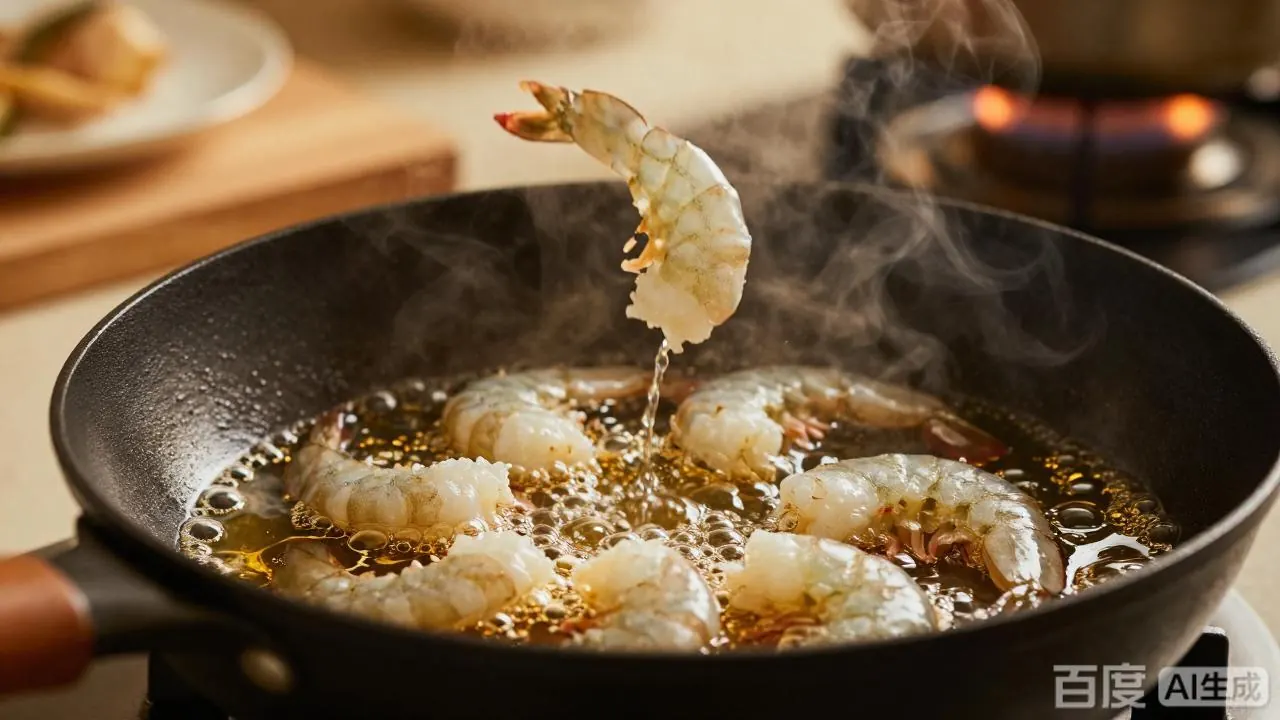
Type Editorial Guide
Linked Ingredients 3
Next Steps 7
The first time I velveted shrimp, I used the dose I use on beef. Half a teaspoon of baking soda for a pound, same as always. Ten minutes later I had a bowl of pink paste, and a flavour that tasted like I'd washed the shrimp in soap. That pan went in the bin, along with the dinner plan.
Shrimp look like the easiest thing in the velveting family — small, lean, fast. They are actually the easiest to ruin, and the reason is simple: the technique that protects a piece of beef will dissolve a shrimp, because shrimp protein is doing a completely different job.
Almost everything written about velveting is about meat. Chicken, beef, pork — those pages outnumber the shrimp ones, and their numbers get copied onto shrimp as if the protein were interchangeable. It isn't. This page is the correction: not "how to velvet shrimp" as a footnote to the meat pages, but the rules that are actually shrimp-specific.
Key Takeaways
- Shrimp velveting is not meat velveting. The underlying science — pH and a starch coat — is shared. Almost every number derived from it is not.
- The clock is the whole difference. Shrimp velvet for 5–10 minutes, not 20–30. The soda is doing the same pH work it does on beef, but shrimp protein is thin and sets fast, so the dose that improves a flank steak turns shrimp mushy.
- Use roughly half the baking soda. ¼ tsp per pound (450 g) is the working home dose; restaurant-style versions go to ½ tsp/lb. Traditional Cantonese kitchens often skip the soda entirely and use salt plus cornstarch instead.
- The starch coat must be thin enough to see the shrimp through it. A heavy coat is breading — and breading buries the crisp snap you're trying to protect.
- The oil runs cooler than for meat, not hotter: 100–140 °C (210–285 °F), the Cantonese 三四成热 bath. This is the opposite of the instinct every other velveting page gives you. High heat makes shrimp seize, curl hard, and turn rubbery in seconds.
The core difference: meat and shrimp want opposite things
The word "velvet" hides the fact that the two proteins have different goals. On a tough cut of meat, velveting changes the meat — it loosens fibre and makes something chewy eat tender. On shrimp, there is nothing to loosen. Shrimp are already tender. What they lose is their spring — the snappy, almost crunchy bite that good shrimp have and overcooked shrimp don't.
So the target is not "softer." It's "still snappy, but no longer losing water." That single shift in goal rewrites the whole recipe:
| Meat (chicken / beef / pork) | Shrimp | |
|---|---|---|
| What you're actually doing | Hold water + tenderize chewy fibre | Hold water + keep the snap — not soften |
| Baking soda, per 450 g | ½–1 tsp | ¼–½ tsp |
| Rest time | 15–30 min | 5–10 min (soda step) |
| Starch coat | A visible jacket you can feel | A film so thin you can still see the shrimp |
| Oil temperature | 150–180 °C | 100–140 °C |
| Time in the oil | 30–60 s | 20–30 s |
| What "too long" gives you | Dry, chewy | Rubbery — or paste |
| The failure to fear | Under-tenderised | Over-softened |
Read the two "goal" cells side by side and the rest of the table explains itself. Every number moves in the direction that protects the snap.
Why shrimp behave so differently
Shrimp are built for speed, not for load-bearing, and their connective tissue is a small fraction of what beef carries. That matters because collagen is what makes a tough cut tough — it is the thing baking soda and long rests exist to work around. A shrimp doesn't have that problem. There is very little of it to work on, so the "tenderize" half of velveting has almost nothing to do, while the "over-soften" risk is right there waiting.
Shrimp cook in seconds, not minutes. They're thin, wet, and their proteins set at a temperature well below a simmer. A piece of beef can sit in a warm oil bath for 30 seconds and be barely started; the same shrimp is done and on its way to rubber. Baking soda does widen that window — that's part of what velveting buys you — but widening a very short window still leaves you a short window.
Salt does double duty on shrimp. In the classic Cantonese method, shrimp get massaged with salt before anything else. The salt isn't only seasoning: it draws off the slimy surface coating, and it firms the flesh slightly, which is exactly where that snappy, almost crystalline texture in good dim-sum shrimp comes from. On meat, salt is mostly a seasoning or a brine. On shrimp, it's a structural step — which is why the traditional method leads with salt and often never adds baking soda at all.
Does velveting work on shrimp?
Yes — and this is where it pays off more than people expect, because shrimp are the easiest protein to overcook and the technique directly buys you margin.
But "works" comes with a qualifier, exactly as it does on the beef and pork pages:
| Shrimp | Velvet it? | Why |
|---|---|---|
| Fresh, mid-size shrimp | Yes — classic | Thin, lean, and fast. A light treatment keeps them plump instead of shrinking to curls. |
| Frozen shrimp | Yes — it helps most | Frozen shrimp are often older and lose water in thawing, so they have the most to gain. Thaw, then dry hard before the coat goes on. |
| Jumbo / large shrimp | Yes, with a slightly longer rest | Thicker flesh needs a touch more contact time — up to 15 minutes — and a little more time in the oil. |
| Small shrimp | Optional | They cook almost instantly; a light starch film with oil is often all they need. |
| Pre-cooked / pink shrimp | No | Already cooked. Velveting a cooked shrimp is just coating it in paste. |
| Dried shrimp | No | Different ingredient entirely. |
The pattern is the mirror of the meat pages: velveting pays off in proportion to how easily the shrimp dry out or toughen. Frozen and larger shrimp gain the most; fresh small ones gain least.
Three ways to velvet shrimp
There is no single "shrimp velveting." There are three methods, and which one you use is a decision, not a default.
| Method | Ratio (per 1 lb / 450 g) | Time | Best for | What it does |
|---|---|---|---|---|
| Egg white + starch (classic Cantonese) | ½ egg white + 1 tbsp cornstarch or potato starch + ½ tsp salt + 1 tsp Shaoxing wine | 20 min chilled (can hold up to 2 h) | 清炒虾仁, shrimp with scrambled egg | Silkiest result; coats without firming |
| Salt + cornstarch (the dim-sum method) | 1 tsp salt massaged in, rinsed, then 1 tsp starch | 15–20 min | 水晶虾仁, salt-and-pepper shrimp | The snappy, crystalline texture; no baking soda at all |
| Baking soda + starch (the rescue) | ¼ tsp soda → rinse → 1 tbsp starch + 1 tsp oil | 5–10 min | Older, frozen, or tough shrimp | Strongest water-holding; the easiest to overdo |
The important thing is not which method is "right" — it's that they're not the same tool. The salt-and-starch version is what a Cantonese banquet kitchen uses for its clearest, snappiest shrimp, and it deliberately leaves out both the egg white and the baking soda. The baking-soda version exists to rescue shrimp that have already lost ground. If your shrimp are fresh and good, you may not need it at all.
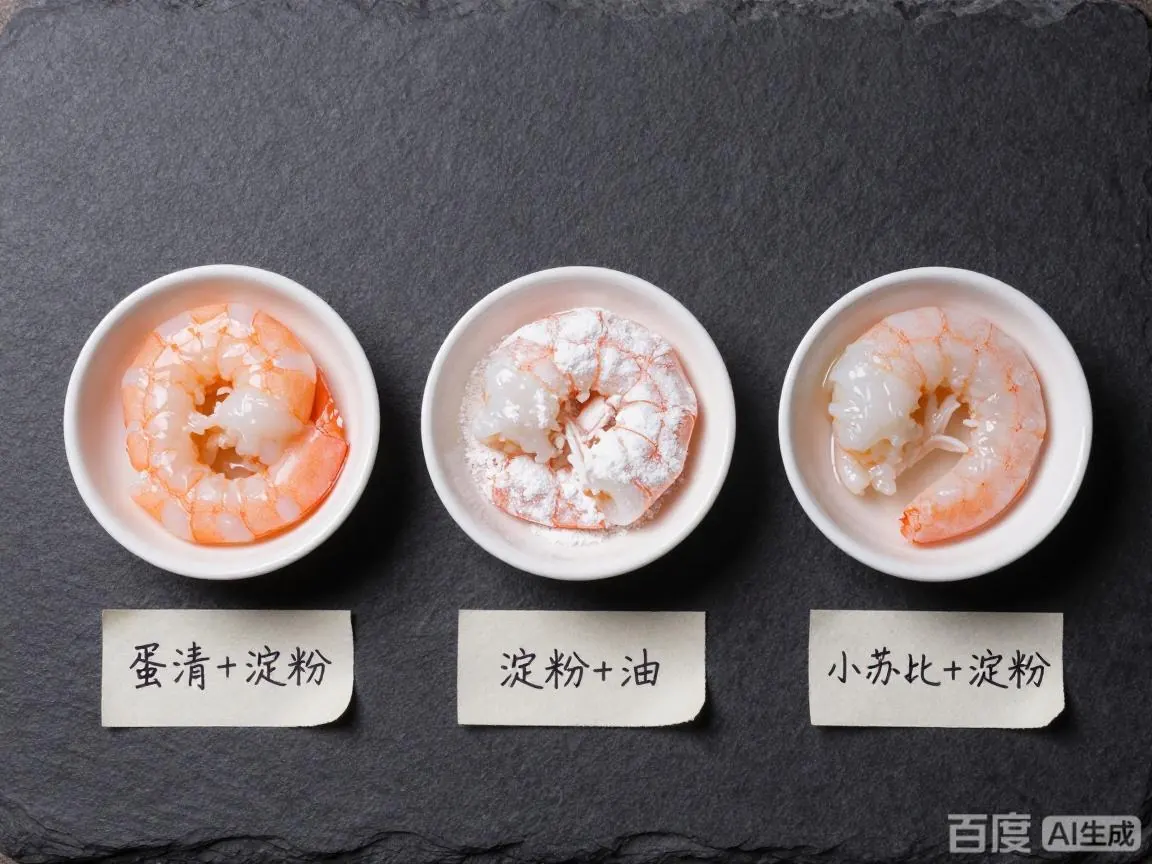
Left to right: the egg-white coat, the dry starch-and-oil film, and the baking-soda slurry. Note how little starch there is in each — the goal is a film, not a shell.
How much baking soda — and why it's about half of meat
Here is the number the "velveting shrimp with baking soda" searches are really after, and the one most recipes get wrong by copying a meat figure.
Working home dose: ¼ tsp baking soda per 1 lb (450 g) of shrimp, then rinsed off. That's the figure the test-kitchen sources converge on, usually paired with a rest of 15 minutes or less. Restaurant-style and "extra-snappy" versions go up to ½ tsp per pound, with a shorter 8–12 minute window.
Put that next to the meat numbers and the "half" rule appears on its own. In the same dosage charts, stir-fry beef strips are given about 1 tsp per pound and pork about 1 tsp per pound — shrimp get ¼ to ½. So a shrimp is treated with roughly a quarter to a half of what a piece of beef would get. That's the whole reason the dose is so small: the soda's pH effect is the same, but there's far less fibre to work on and a much shorter fuse before "springy" tips over into "soft."
Two consequences worth stating plainly:
- More soda does not get you "more velvety." On meat, overshooting gives you a mushy surface. On shrimp, the same overshoot goes one worse: the flesh loses its structure entirely and turns to paste, with a soapy, alkaline edge. That's the bowl I threw away.
- If you can't measure, choose salt instead. The salt-and-cornstarch method has a far wider margin for error than any baking-soda dose does. When in doubt on shrimp, don't reach for the soda first.
The oil runs cooler, not hotter — the rule that breaks the meat playbook
This is the single biggest place shrimp diverge from the meat pages, and the one piece of advice that gets repeated incorrectly most often. On the chicken, beef, and pork pages, "hotter" is generally your friend. On shrimp, hotter is what ruins the dish.
Traditional Cantonese 滑油 for shrimp is done at 三四成热 — roughly 100–140 °C (210–285 °F): a calm surface, a few fine bubbles around a chopstick, no smoke. Chinese technique references are consistent on this — the standard 滑炒虾仁 procedure puts the oil around 120–140 °C and pulls the shrimp after 10–15 seconds, while banquet-level recipes for 水晶虾仁 run it as low as 110–120 °C for around 20 seconds, one of them measuring the oil at 113 °C before a batch goes in.
Why lower, when meat goes higher? Because shrimp protein sets at a low temperature and the flesh is thin — so a gentle oil walks the protein up to cooked without ever wrenching it. Crank the oil to 170–180 °C and the surface seizes instantly: the shrimp curls hard, turns stiff and rubbery, and the coating can set into a dry, chalky skin before the inside is even warm. Low, slow oil is what keeps them plump.
"But won't cool oil make the coating slide off?" This is the one real objection, and it's the reason the number isn't simply "as low as you like." Oil that's too cool — or a shrimp that's wet, or a coat that hasn't rested — can let the starch film loosen and shed. The fix, though, is not more heat. It's a drier shrimp and a proper rest: pat the shrimp hard before coating, let the starch hydrate on the shrimp for a few minutes, and the film will hold at 120 °C just fine. Turning up the oil to cure a coating problem trades one fault for a worse one.
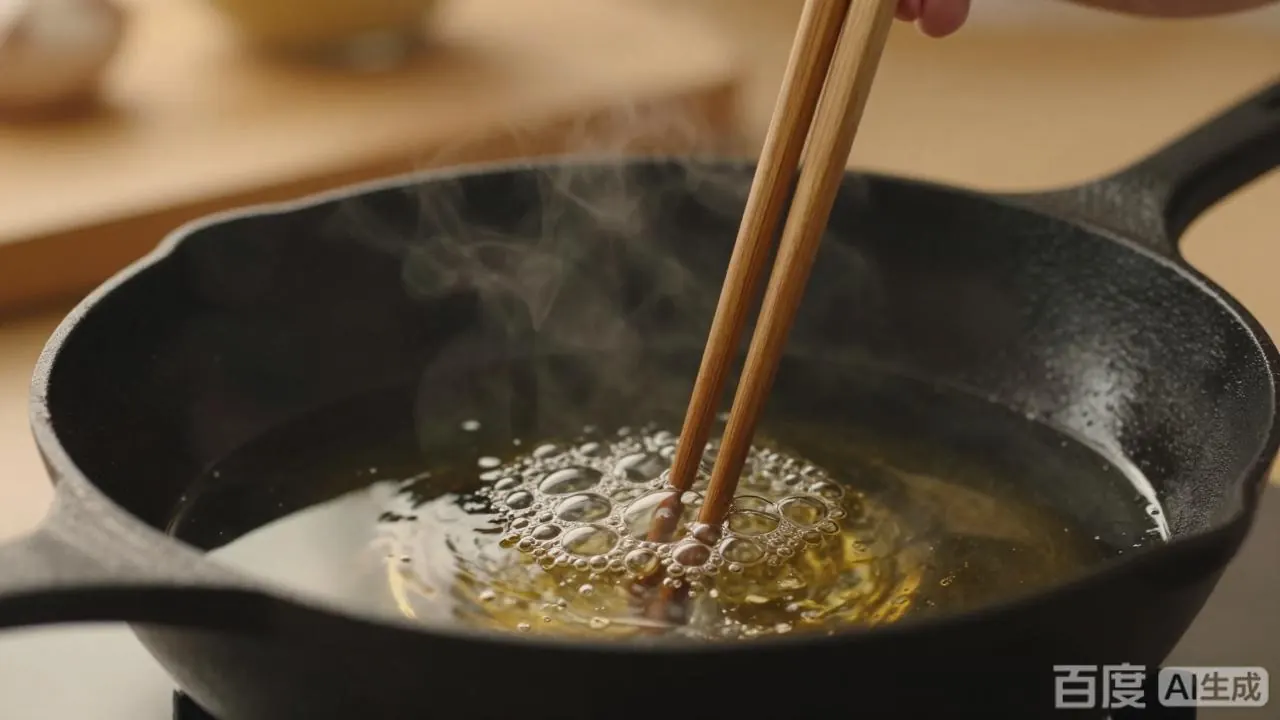
A chopstick is enough: a few fine bubbles crawling up the tip means you're in the low 三四成热 window you want for shrimp. Dense bubbles and smoke mean you've overshot — and shrimp don't forgive that.
The rinse rule: do you have to rinse shrimp after baking soda?
If you used baking soda, yes — every time, and more carefully than with meat. Shrimp have very little fat and a delicate flavour, so there's nothing to hide an alkaline residue behind: leave it on and the dish tastes soapy, and the surface keeps softening toward mush.
- Taste. Residual bicarbonate reads soapy and slightly bitter, and on shrimp it's the first thing anyone notices.
- Texture. The powder keeps working, pushing the flesh past "snappy" into "soft" and then "slimy."
- How to rinse: cold running water for about 30 seconds, until the shrimp no longer feel slick. Then pat or squeeze them bone-dry — wet shrimp are the number-one cause of a coat that won't stick and a stir-fry that steams instead of searing.
- Salt-only or starch-only method: nothing to rinse. The salt-and-cornstarch method does call for rinsing the first salt massage, but the final starch coat stays on.
Step by step: velveting shrimp at home
Ten steps for the baking-soda method; swap step 4 for "skip the soda, use only salt and starch" if you want the dim-sum version.
- Peel and devein. Split the back shallowly and pull the vein. If you want the shrimp to curl into a ball when cooked, cut a little deeper along the back.
- Rinse and de-slime. Toss the shrimp with a teaspoon of salt and a splash of cold water, massage for 30 seconds, then rinse until the water runs clear and the shrimp stop feeling slippery.
- Dry them completely. This is the step people skip and then blame the oil for. Pat, then pat again; a wet shrimp will never hold a coat.
- (Optional) Baking soda — ¼ tsp per pound. Toss until every shrimp is coated. Rest 5–10 minutes. Do not walk away and forget them.
- Rinse the soda off under cold water — only if you used it.
- Dry again. Really dry. Squeeze gently in a clean towel if you have to.
- Season and hydrate: a pinch of salt, a splash of Shaoxing wine, a little white pepper, and — if you want maximum silk — half an egg white. Toss one direction until it feels tacky.
- Add the starch — 1 tbsp per pound — and toss until each shrimp wears a thin, even film. Then a teaspoon of oil to stop them sticking.
- Rest, chilled, 5–10 minutes so the starch hydrates and the coat sets. (The egg-white versions rest longer — 20 minutes up to a couple of hours — because they aren't fighting a chemical timer the way soda is.)
- Blanch in oil at 100–140 °C for 20–30 seconds, just until the shrimp curl into a loose C and turn opaque. Lift them out at once — the residual heat finishes them in the final stir-fry.
Step 4 is the only optional one, and it's optional in both directions: add it for older shrimp, skip it for good fresh ones.
Troubleshooting: how velveting shrimp goes wrong
| What you see | What went wrong | The fix |
|---|---|---|
| Shrimp turn to paste, lose all snap | Too much baking soda, or rested too long | Drop to ¼ tsp per pound; rest 5 minutes, not 20 |
| Soapy, bitter aftertaste | Soda wasn't rinsed off | Rinse under cold water a full 30 seconds |
| Coating slides off, oil goes cloudy | Shrimp were wet, or the oil was too cool, or no rest | Dry hard, rest the coat 5 min, hold oil at 120 °C |
| Shrimp stiff and rubbery | Oil was too hot | Drop the oil to 三四成热, 100–140 °C |
| A thick, pasty shell | Too much starch | Tap off the excess; you want a film, not a jacket |
| Stir-fry turns wet and steamy | Shrimp weren't dried and were dumped in all at once | Dry completely; cook in small batches so the oil recovers |
| Shrimp bland and watery | Salt added too early and sat, drawing water out | Salt late, or rely on the rinse-and-dry sequence |
One line to keep: paste means too much soda, soap means rinse, cloudy oil means wet shrimp, and rubber means the oil was too hot.
Where this leaves you, if you came from the meat pages
If you arrived from the chicken, beef, or pork guide, the mental switch is this: on meat, velveting is a repair job; on shrimp, it's a protection job. Meat gets loosened. Shrimp get shielded. Everything else follows from that one difference.
So the numbers change accordingly — shorter rest, less soda (or none), a thinner coat, and cooler oil. Treat a shrimp like a small piece of chicken breast and you'll get the rubbery, soapy result that the internet keeps complaining about. Treat it as its own protein, with its own goal, and it's one of the highest-return techniques in a Chinese kitchen.
FAQ
Can you velvet shrimp with baking soda?
Yes, and it works well — but at a fraction of the usual meat dose. Use about ¼ tsp per pound (450 g), rest only 5–10 minutes, and rinse it off completely before coating with starch. Up to ½ tsp per pound is used in restaurant-style versions with a shorter rest. Overdo it and the shrimp go soft and paste-like with a soapy taste; traditional Cantonese kitchens often skip the soda and use salt plus cornstarch instead.
How long do you velvet shrimp?
For the baking-soda method, 5–10 minutes — much shorter than the 20–30 minutes meat needs, because shrimp protein is thin and sets fast. The egg-white-and-starch method marinates longer (20 minutes up to a couple of hours), but it contains no chemical tenderizer, so it isn't on a short fuse. Whatever the method, the shrimp rest in the coat only until the starch hydrates.
Do you have to rinse shrimp after velveting with baking soda?
Yes, if you used it. Rinse under cold running water for about 30 seconds until the shrimp no longer feel slick, then dry them completely before the starch coat goes on. Skipping this leaves a soapy, bitter note — shrimp have no fat to hide it behind — and the surface keeps softening toward mush.
Can you velvet frozen shrimp?
Yes, and they benefit most, because freezing and thawing cost them water. Thaw completely (in the fridge or under cold running water), then dry them aggressively — frozen shrimp release a lot of liquid — before the coat goes on. A light baking-soda pass is worth it here precisely because thawed shrimp are the ones most likely to come out dry or rubbery.
What is the difference between velveting and marinating shrimp?
A marinade adds flavour; velveting adds a physical and chemical barrier. Velveting has two parts: an alkaline step (baking soda, or just salt) that raises the surface pH so the shrimp hold water, and a starch coat that gels on contact with heat to seal that water in. A plain marinade can flavour shrimp, but it won't give you the plump, snappy texture — and a wet marinade can actually work against you by making the surface too wet to hold a coat.
Do you need egg white, or cornstarch, to velvet shrimp?
No to egg white — the classic Cantonese shrimp method uses salt and cornstarch with no egg white and no baking soda, and it produces the snappiest result of all. Cornstarch is the more load-bearing of the two: it's the part that becomes the protective film. You can velvet with baking soda alone (rinse-and-cook), but you lose the coating that keeps the shrimp from drying and sticking, so the result is softer without being silky.
For all four proteins on one printable sheet — doses, rest times and the oil stages, including the cooler shrimp bath — there's the velveting cheat sheet PDF.
Related guides
- Velveting 101 — the technique from the ground up
- Velveting chicken — where the egg-white-vs-starch question matters
- Velveting beef — cornstarch vs baking soda as two stages
- Velveting pork — where fat content, not fibre, drives the decision
- Oil temperature guide — and why shrimp sit at the cool end of it
- Starch slurry guide — why starch thickens, gels, and clings
- Fish sauce — an optional finishing note for shrimp dishes
On this page
- Key Takeaways
- The core difference: meat and shrimp want opposite things
- Why shrimp behave so differently
- Does velveting work on shrimp?
- Three ways to velvet shrimp
- How much baking soda — and why it's about half of meat
- The oil runs cooler, not hotter — the rule that breaks the meat playbook
- The rinse rule: do you have to rinse shrimp after baking soda?
- Step by step: velveting shrimp at home
- Troubleshooting: how velveting shrimp goes wrong
- Where this leaves you, if you came from the meat pages
- FAQ
- Related guides
Continue Exploring

Written by Mike Sang
Digital strategist, fermentation science enthusiast, and student of the Tao. Bridging growth engineering with ancient Chinese food wisdom.
Seasonal Context
Flavor changes with the season. Your cooking should too.
Missing Umami is part of The Way of Nature, a living system connecting food, timing, and seasonal practice.